
Heat pump comparison
The different types of heat pumps all have their own advantages and disadvantages. The Bosch heat pump comparison will help you find the best heat pump for your needs based on different energy sources, performance figures, and other selection criteria.

Table of content
- Which type of heat pump suits you?
- How do heat pumps differ in terms of the most important factors?
- Heat pump compared to gas and oil heating
- Disadvantages depending on the type of heat pump
- Frequently asked questions about heat pumps in comparison
- How do heat pumps differ in terms of the most important factors?
Which type of heat pump suits you?
The various heat pumps are differentiated according to their heat source: geothermal heat pumps extract heat from the ground by means of a geothermal probe or a surface collector, groundwater heat pumps extract heat from the groundwater with the help of a special well, and air-source heat pumps use the thermal energy from the ambient air. This heat is then harnessed for heating and hot water.
The different types of heat pumps each have different advantages and disadvantages, so it is not possible to give a blanket answer as to which variant is best for you.
It all depends on what you personally value and what can be implemented on site. In a new building, you are relatively free to decide which type of heat pump you want to use. However, in certain regions, such as water protection areas, the construction of a groundwater heat pump or a geothermal probe may be prohibited. In most old buildings, only the installation of an air heat pump is practicable, since no drilling or similar earthworks are necessary for this. However, air source heat pumps have a slightly lower COP and efficiency compared to other heat pumps.
-
Geothermal heat pump
Variants Brine-water heat pump Heat sources Soil Advantages and disadvantages + high energy efficiency
- more expensive due to additional development or drilling work
- often unsuitable for old buildings -
Groundwater heat pump
Variants Water-to-water heat pump Heat sources Groundwater Advantages and disadvantages + high energy efficiency
- more expensive due to additional development or drilling work
- often unsuitable for old buildings -
Air source heat pump
Variants Air-to-water heat pump Heat sources Air Advantages and disadvantages + favorable
+ also suitable for old buildings
- Slightly lower efficiency -
Air-to-air heat pump
Variants Air-to-air heat pump Heat sources Air Advantages and disadvantages + favorable
+ also suitable for old buildings
- Slightly lower efficiency
How do heat pumps differ in terms of the most important factors?
The way heat pumps work is always similar: they use electricity to harness free environmental energy. But in detail, the various heat pump heating systems differ.
Heat pump function
Heat pump function
The basic function of heat pumps is mostly the same. A refrigerant is vaporized with the heat from the respective heat source. The vapor is then compressed in the compressor before transferring its heat to the house's heating circuit. But there are exceptions: With air-to-air heat pumps, the heat is distributed to the living spaces by air rather than by a heating water circuit. With domestic hot water heat pumps, on the other hand, only water can be heated and not the house.
Space requirements and installation effort
Space requirements and installation effort
The space requirements and installation effort of the different types of heat pumps are comparable. Geothermal and groundwater heat pumps are usually installed in the basement or boiler room, while air-source heat pumps can also be installed outdoors or in a split design. In this case, all noise-emitting components of the air-source heat pump are installed outside the house and only the necessary parts are installed inside. In terms of installation effort, however, the types differ immensely. While air-to-water heat pumps are uncomplicated to set up and installation can be completed in two to three days in most cases, the development of ground-source heat pumps is rather complex. Extensive earthworks are required, which may also be subject to approval. The same applies to water-source heat pumps.
Costs and promotion
Costs and promotion
A comparison of the costs for a heat pump shows significant differences depending on the device and the environmental heat used. Air-source heat pumps are the cheapest to buy, while ground-source heat pumps are significantly more expensive. On the other hand, you benefit more than average from government subsidies when purchasing ground-source heat pumps.
Type of heat pump with total price (acquisition + development):
- Air source heat pump 10.000 to 18.000 Euro
- Groundwater heat pump 15,000 to 22,000 euros
- Ground source heat pump with surface collector 14.000 to 19.000 Euro
- Geothermal heat pump with ground probe 20.000 to 25.000 Euro
Grants are available for heat pumps through BEG to reduce costs. In addition, you receive a heating exchange bonus if you replace a fossil-fuelled heating system. Efficient heat pumps (heat pump + RE hybrids, heat source: water, ground, wastewater) are subsidized even more. You will receive the maximum subsidy amount for a brine-to-water heat pump when replacing an old oil or gas heating system. We will be happy to inform you about the exact percentages on our advice page on subsidies for heat pumps.
Coefficient of performance and annual performance factor (COP)
Coefficient of performance and annual performance factor (COP)
The coefficient of performance (COP) characterizes the efficiency of the heat pump and makes it possible to compare different heat pump units before purchase. The COP is determined under laboratory conditions. The annual performance factor (APF) is more informative. It is determined individually for the respective building and the heating system and indicates how efficiently heat is generated with the electricity used. The COP can only be determined when your heat pump heating system has already been in operation for around one year.
Type of heat pump with the respective annual performance factor:
- Air source heat pump 2.5 - 3
- Ground source heat pump with surface collector 3,5 - 4
- Ground source heat pump with geothermal probe 4 - 4,5
- Groundwater heat pump 5
Cooling function
Cooling function
In principle, all types of heat pumps are also suitable for cooling. To do this, the heat pump simply works in the opposite direction and transports warm air from the inside to the outside. Domestic hot water heat pumps are of course excluded from this, as they are only used to heat water. When combining a heat pump with a photovoltaic system, there is even another advantage - the PV system produces a lot of electricity exactly when cooling is also desirable: in summer.
Combination with other heating systems
Combination with other heating systems
If required, heat pumps can be combined with a second heating system, for example a gas condensing boiler or a photovoltaic system. Such hybrid heat pumps work very efficiently thanks to an intelligent control system, as the more advantageous heat generator is always activated. If, for example, an air-to-water heat pump can no longer generate enough heat on very cold winter days, the gas heating system switches on and supports the system.
Find an installer now!
Heat pumps comparison: which one is right for me?
Which heat pump is the right one depends on the heat demand of the building, the space available and whether it is a new building or an old building to be modernized.


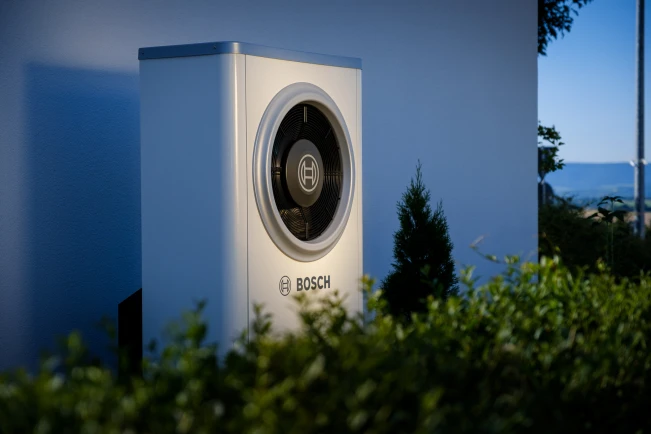
Which heat pump best suits my house and property?

Choose between three different heat pumps and test how they look in front of your house. Simply scan the QR code, point it at your house or property and the selected heat pump will appear in its original size on the display.


Heat pump compared to gas and oil heating
In comparison with an oil or gas heating system, the heat pump has many convincing advantages - both for new buildings and when an old heating system is to be replaced in an existing building.
It is true that a heat pump is more expensive to buy than an oil or gas heating system, and there may be additional costs for energy-efficient renovation. But the investment is worthwhile. When you buy a heat pump, you benefit from attractive government subsidies, whereas gas and oil heating systems are not subsidized. Furthermore, you make yourself independent of the rising oil and gas prices.
Especially if you purchase electricity at a favorable heat pump rate, the operating costs of a heat pump are sometimes lower than those of a gas condensing boiler. If you have your own photovoltaic system, you can heat almost free of charge with the solar power you produce yourself. And the maintenance costs of a heat pump heating system are also lower than those of an oil or gas heating system. Last but not least, you protect the environment by operating a heat pump.
More about heat pump or gas
Disadvantages depending on the type of heat pump
Any technology has its drawbacks, and heat pumps are not free of them. Often the disadvantages depend on the conditions on site.
More about heat pump disadvantages
| Type of heat pump | Disadvantages |
|---|---|
| Geothermal heat pump |
|
| Groundwater heat pump |
|
| Air-to-water heat pump |
|
Frequently asked questions about heat pumps in comparison
rezultat pronađen za „"
rezultata pronađeno za „"
What are the conditions for the promotion of heat pumps?
What are the conditions for the promotion of heat pumps?
Regardless of whether geothermal, air or water - all heat pump technologies are eligible for attractive government subsidies via the federal subsidy for efficient buildings. However, to qualify for the highest possible subsidy rate, you must completely replace your fossil fuel oil or gas heating system with an efficient heat pump heating system. Otherwise, you will receive a lower subsidy.
To the heat pumps promotion
When is a heat pump generally worthwhile?
When is a heat pump generally worthwhile?
Whether a heat pump is financially worthwhile depends on many factors. With a small sample calculation, you can work out how much you will save in terms of operating costs. Simply divide your electricity price by the expected annual performance factor (APF) of the heat pump. If the result is less than your gas or heating oil price, then you are likely to save money with the heat pump. Keep in mind, however, that the price of electricity, as well as oil and gas, is subject to fluctuation. What we do know for sure, however: Fossil fuels will become more expensive in the future due to CO2 pricing. Even if you value environmental protection, you should consider a heat pump.
Which heat pump consumes the least electricity in comparison?
Which heat pump consumes the least electricity in comparison?
How efficiently a heat pump works always depends on the individual case. In general, you can compare the annual performance factor (APF) of different heat pumps. This indicates how many kilowatt hours (kWh) of heat the heat pump generates with one kWh of electricity. According to this, groundwater heat pumps are the most efficient with an APR of about 5 and require the least electricity. Air source heat pumps are the least efficient (2.5 to 3), but they are the least expensive to purchase. Also, check with your energy supplier for low-cost heat pump electricity rates.
What are the differences in heat pumps?
What are the differences in heat pumps?
Heat pumps are differentiated according to the heat source. There are classic forms such as air-water, brine-water and water-water heat pumps. In addition, there are special forms such as the domestic hot water heat pump or the air-air heat pump. The different types each bring different advantages and disadvantages, so you can compare them by efficiency or even cost.
How do heat pumps differ in terms of the most important factors?
The way heat pumps work is always similar: they use electricity to harness free environmental energy. But in detail, the various heat pump heating systems differ.