
Gas Tankless Water Heaters Troubleshooting
A2 Error
A2 Error
Tools Needed
Digital Multi-meter
Hand Tools
Error Code Information
| Models |
250SX / 250SXO GWH 635ES / GWH 635ESO 2400E / 2400EO |
| Error Code | A2 |
| Error Code Meaning |
Fault in the flue gas limiter / overheat protection fault. An A2 error indicates a problem related to the overheat fuse/sensor in the upper half of the heater. More Info... On early heaters the sensor is a white overheat fuse that wraps around the heat exchanger. This sensor is designed to trip at approximately 355°F or 180°C. On newer heaters the sensor is a flue gas limiter that is mounted inside the upper right or left corner of the heater cabinet, above the copper heat exchanger (not to be confused with the green overheat sensor that mounts directly to the heat exchanger). The flue gas limiter is designed to trip if it senses temperatures exceeding 220°F or 104°C in the upper chamber of the heater. |
| Possible Causes |
Leak in the heat exchanger Bad sensor Bad wire connection. |
Troubleshooting Steps
NOTE: DO NOT jump out the fuse or sensor. Jumping the fuse or sensor is dangerous because it removes a critical safety circuit from the heater.
Step 1. Reset the error code
- Use the reset button to reset the error code.
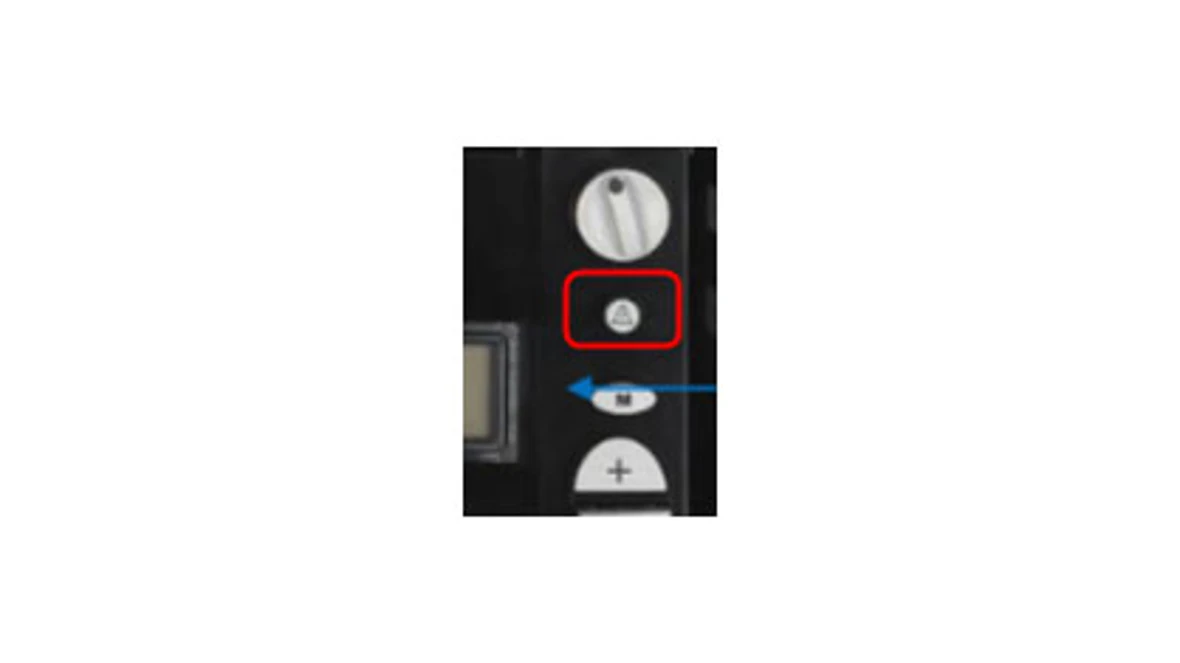
Result:
- If the error code resets, the sensor has cooled down, but will most likely trip again. Go to step 2.
- If the error code does not reset it could be an open sensor, leak in the heat exchanger or bad wire connection. Go to step 2.
Step 2. Verify wiring
- Older units may have a white wire wrapped around the heat exchanger. Verify if this white wire is plugged into the black wires connected to the control box.
- While looking for the white wire, look around the copper heat exchanger for signs of exhaust gases leaking from the
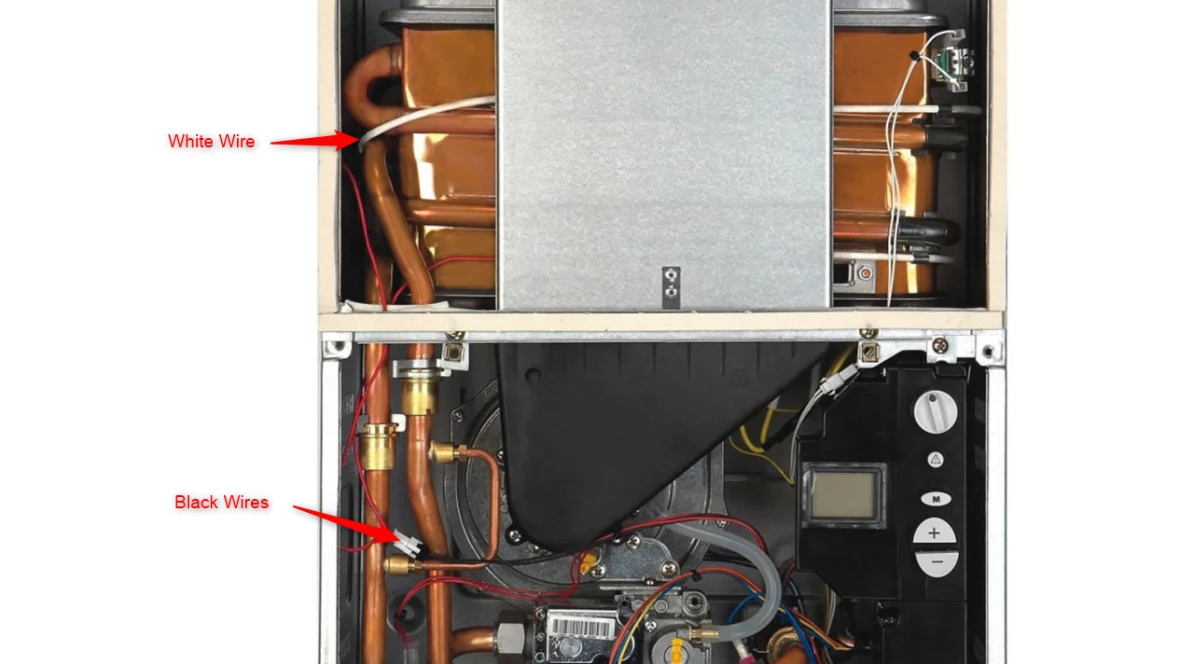
- If there are signs of an exhaust leak (anything burned, melted, scorched, etc.), contact the Bosch technical support specialists.
- If the white wire that is wrapped around the heat exchanger is plugged into the black wires leading to the control box and there are no signs of an exhaust leak, it's most likely the white wire got to close to the heat exchanger over time and has triggered the code. You can find the part number for the flue gas limiter retrofit kit through our Aftermarket Resource Center.
- If the white wire wrapped around the heat exchanger is not connected to the control board, look to see if there is a sensor attached to the top left or right inside of the cabinet that is connected to white wires. See the pictures in bulletin TWH-G2-30 for further information.
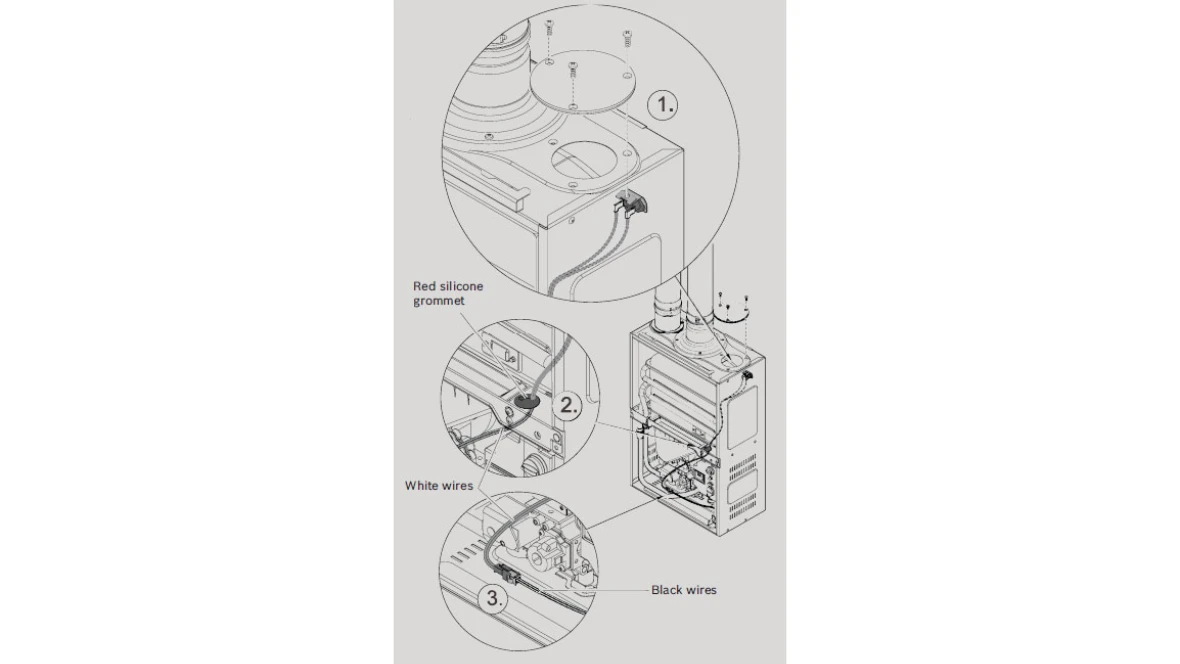
- If the flue gas limiter is installed, ensure tight wire connections.
- If the error code doesn't go away, contact the technical support specialists.
A7 Error
A7 Error
Tools Needed
Digital Multi-meter
Basic hand tools (wrench, screwdriver, etc.)
Error Code Information
| Models |
250SX / 250SXO GWH 635ES / GWH 635ESO 2400E / 2400EO |
| Error Code | A7 |
| Error Code Meaning |
Hot water temperature sensor/receiver defect An A7 error indicates a problem related to the hot water sensor (located on the hot water pipe at the bottom of the unit). |
| Possible Causes | The sensor may be sensing temperatures outside normal parameters, the unit needs to be serviced or the sensor itself may be defective. |
Troubleshooting Steps
DO NOT automatically assume a bad sensor. The error may be legitimate and the heater may be trying to tell us that is sensing temperatures out of range.
Step 1. Has the unit ever been maintained/serviced?
- If yes, go to step 2
- If no, service the unit by doing a descale treatment and removing the heat exchanger to clean the combustion chamber.
Step 2
- Ensure the two red wires leading to the sensor are connected tightly and the sensor is firmly clipped to the hot water pipe. The sensor should be clipped to the top, middle of the horizontal section of the hot water pipe. Check the temperature sensor and contacts for corrosion. Clean contacts with light sandpaper or an eraser.
Results:
- If corroded badly, the sensor will need to be replaced. You can find the part number for the temperature sensor through our Aftermarket Ressource Center.
- If everything is clean and connected as it should be, go to step 3.
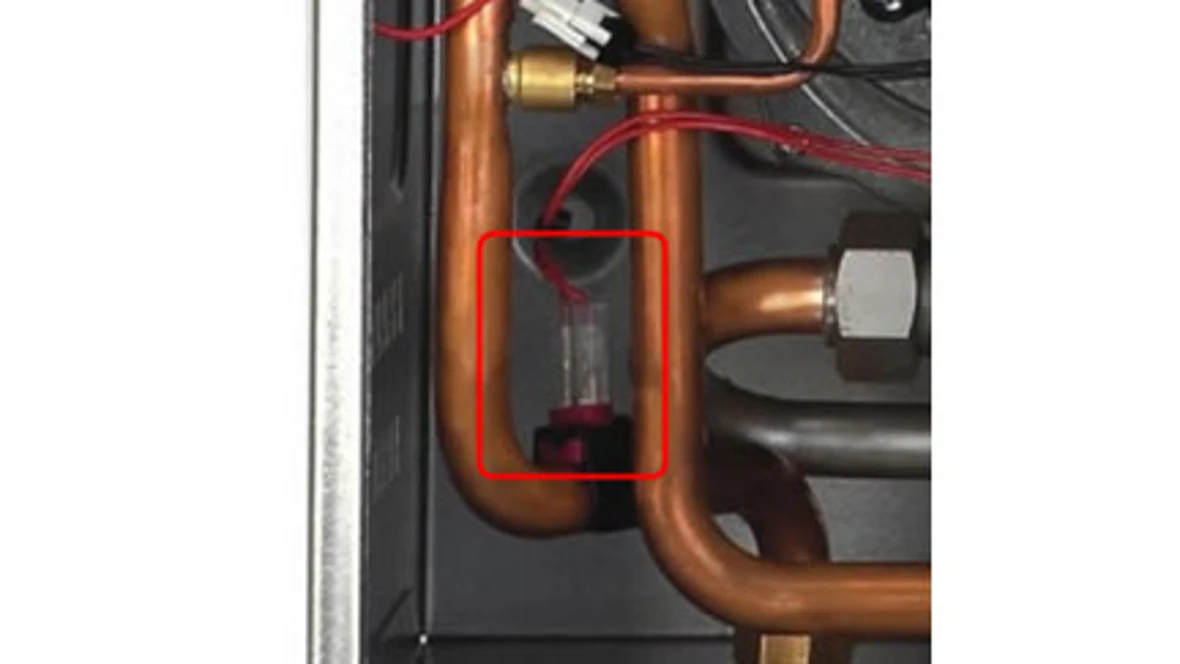
Step 3
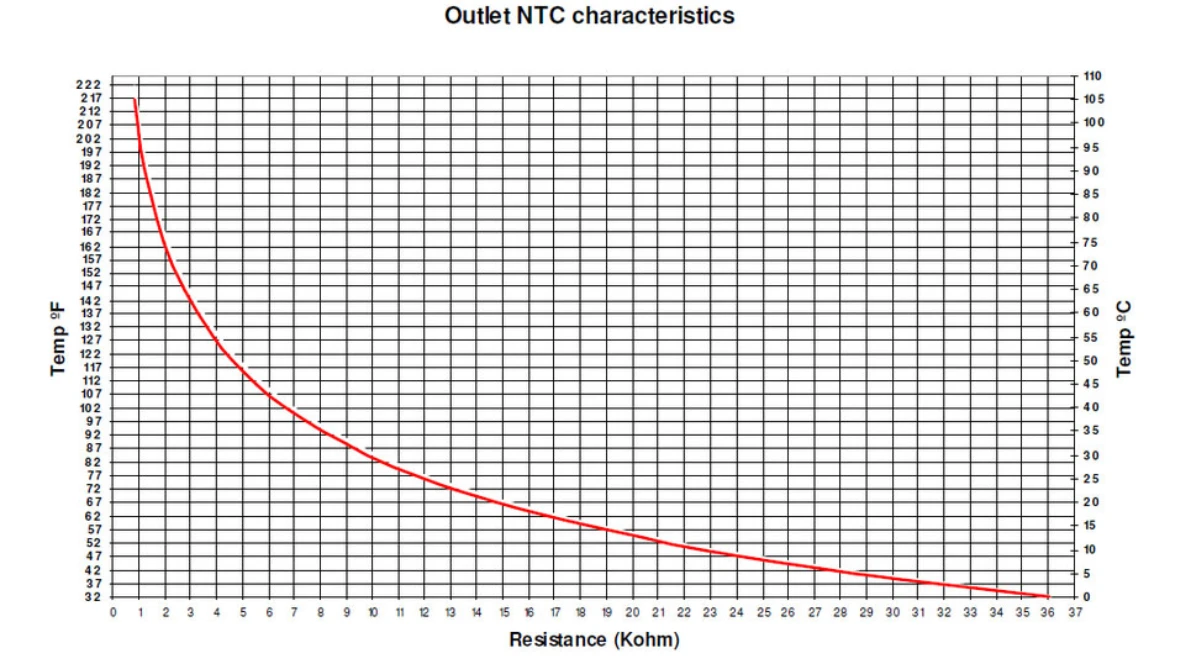
- Ohm out the sensor using the temperature sensor chart in the manual to compare the temperature of the water to the K ohm reading of the sensor. This can be completed by removing the wires from the sensor and placing the probes of the meter on the metal tabs on the sensor.
- Does the K ohm reading match the temperature reading?
Results:
- If yes, contact the Bosch technical support specialists.
- If no, the sensor will need to be replaced. You can find the part number for the temperature sensor through our Aftermarket Resource Center.
A9 Error
A9 Error
Tools Needed
Digital Multi-meter
Basic hand tools (wrench, screwdriver, etc.)
Error Code Information
| Models |
250SX / 250SXO GWH 635ES / GWH 635ESO 2400E / 2400EO |
| Error Code | A9 |
| Error Code Meaning |
Outlet temperature sensor not sensing set temperature An A9 error indicates that the hot water temperature sensor is not sensing the expected outlet temperature. The error code may flash on the display while the heater continues to run or it may shut off the heater, requiring the error code to be reset. |
| Possible Causes | There are a variety of potential causes for the A9. A9 may be caused by a temperature undershoot or overshoot. A bad or mispositioned hot water temperature sensor may also cause an A9 error. A9 can also be influenced by different control board software versions. |
Troubleshooting Steps
Step 1. Has the unit ever been maintained/serviced?
- If yes, go to step 2
- If no, service the unit by doing a descale treatment and removing the heat exchanger to clean the combustion chamber.
Step 2
- Ensure the two red wires leading to the sensor are connected tightly and the sensor is firmly clipped to the hot water pipe. The sensor should be clipped to the top, middle of the horizontal section of the hot water pipe. Check the temperature sensor and contacts for corrosion. Clean contacts with light sandpaper or an eraser.
Results:
- If corroded badly, the sensor will need to be replaced. You can find the part number for the temperature sensor through our Aftermarket Ressource Center.
- If everything is clean and connected as it should be, go to step 3.
Step 3
- Ohm out the sensor using the temperature sensor chart in the manual to compare the temperature of the water to the K ohm reading of the sensor. This can be completed by removing the wires from the sensor and placing the probes of the meter on the metal tabs on the sensor.
- Does the K ohm reading match the temperature reading?
Results:
- If yes, contact the Bosch technical support specialists.
- If no, the sensor will need to be replaced. You can find the part number for the temperature sensor through our Aftermarket Resource Center.
C1 Error
C1 Error
Tools Needed
Digital Multi-meter
Basic hand tools (wrench, screwdriver, etc.)
Error Code Information
| Models |
250SX / 250SXO GWH 635ES / GWH 635ESO 2400E / 2400EO |
| Error Code | C1 |
| Error Code Meaning |
Fan rotation too low at start-up A C1 error indicates the fan speed is too low (out of parameters) during attempted start-up. |
| Possible Causes | C1 is not a common error. There is not a common cause for the C1 error. |
Troubleshooting Steps
Note: A C1 error can occasionally occur if another error is not reset properly or if the heater is turned on and off quickly while the fan is still purging. A one-time error under these circumstances should not be a concern.
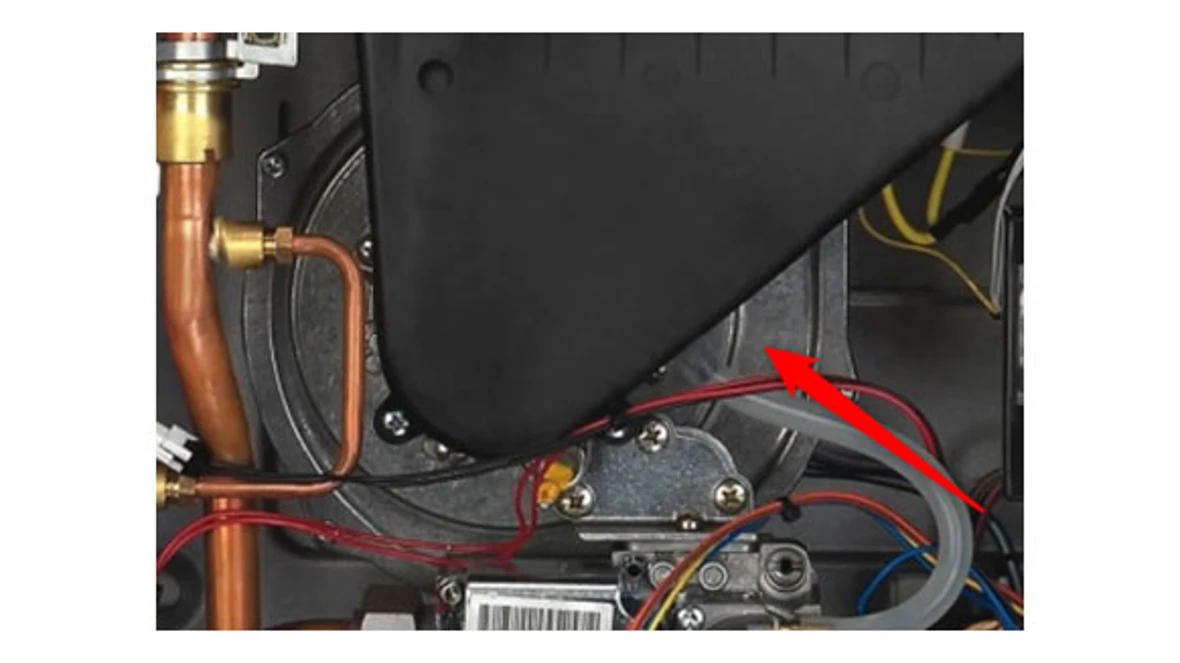
Step 1. Check the fan for damage, debris or water.
- The blower fan is located in the bottom half of the unit and has a black air scoop on the front of it.
- Remove a metal bar that goes across the middle of the unit by removing the two screws, one on either end of the metal bar, to get the air scoop off the front of the fan by removing the two screws at the bottom of the scoop. Once removed, the inside of the fan can be inspected.
Results:
- If there is debris, remove it and reset the code. If the code comes back, go to step 2.
- If the fan is damaged, it will need to be replaced. You can find the part number for the fan through our Aftermarket Resource Center.
- If no damage, debris or water go to step 2.
Step 2. Check for blockage in the flue pipe.
Result:
- If no blockage, contact the Bosch technical support specialists.
C6 Error
C6 Error
Tools Needed
Digital Multi-meter
Basic hand tools (wrench, screwdriver, etc.)
Error Code Information
| Models |
250SX / 250SXO GWH 635ES / GWH 635ESO 2400E / 2400EO |
| Error Code | C6 |
| Error Code Meaning |
Fan rotation too low during operation A C6 error indicates the fan speed is too low (out of parameters) during attempted start-up |
| Possible Causes | C6 is not a common error. There is not a common cause for the C6 error. |
Troubleshooting Steps
Step 1. Check the fan for damage, debris or water.
- The blower fan is located in the bottom half of the unit and has a black air scoop on the front of it.
- The metal bar that goes across the middle of the unit will need to be moved by removing the two screws, one on either end of the bar, to get the air scoop off the front of the fan. Once removed, the inside of the fan will become visible.
Results:
- If there is debris, remove it and reset the code. If the code comes back, go to step 2.
- If the fan is damaged, it will need to be replaced. You can find the part number for the fan through our Aftermarket Resource Center.
- If no damage, debris or water go to step 2.
Step 2. Check for blockage in the flue pipe.
Result:
- If no blockage, contact the Bosch technical support specialists.
C7 Error
C7 Error
Tools Needed
Digital Multi-meter
Basic hand tools (wrench, screwdriver, etc.)
Error Code Information
| Models |
250SX / 250SXO GWH 635ES / GWH 635ESO 2400E / 2400EO |
| Error Code | C7 |
| Error Code Meaning |
No rotational speed sensor signal from fan A C7 error indicates that the heater is not sensing any fan speed |
| Possible Causes | C7 is not a common error, but can be associated with water or condensation damage in the heater due to improper installation. |
Troubleshooting Steps
If the fan assembly is damaged by water, DO NOT assume that replacing the fan will fix the heater. It is likely that other parts (particularly the gas valve) have also been damaged.
Step 1. Check the fan for damage, debris or water.
- The blower fan is located in the bottom half of the unit and has a black air scoop on the front of it.
- The metal bar that goes across the middle of the unit will need to be moved by removing the two screws, one on either end of the bar, to get the air scoop off the front of the fan. Once removed, the inside of the fan will become visible.
Results:
- If there is debris, remove it and reset the code. If the code comes back, go to step 2.
- If the fan is damaged, it will need to be replaced. You can find the part number for the fan through our Aftermarket Resource Center.
- If no damage, debris or water go to step 2.
Step 2. Check for blockage in the flue pipe.
Result:
- If no blockage, contact the Bosch technical support specialists.
CA Error
CA Error
Tools Needed
Digital Multi-meter
Basic hand tools (wrench, screwdriver, etc.)
Error Code Information
| Models |
250SX / 250SXO GWH 635ES / GWH 635ESO 2400E / 2400EO |
| Error Code | CA |
| Error Code Meaning |
Water flow signal over specified maximum value. A CA error indicates excessive water pressure or water flow (approx 10 gpm) through the heater |
| Possible Causes | CA is not a common error but is almost always related to unusually high inlet water pressures. This is usually not a heater problem, but instead is an external plumbing issue. |
Troubleshooting Steps
Step 1. Check the flow rate.
Results:
- If flowing over 10 GPM, the flow will need to be reduced.
- If not flowing over 10 GPM,contact the Bosch technical support specialists.
- Flow rate can be confirmed by getting a container with a known volume and timing how long it takes to fill.
E1 Error
E1 Error
Tools Needed
Digital Multi-meter
Basic hand tools (wrench, screwdriver, etc.)
Error Code Information
| Models |
250SX / 250SXO GWH 635ES / GWH 635ESO 2400E / 2400EO |
| Error Code | E1 |
| Error Code Meaning |
Over-temperature detected by hot water sensor E1 indicates the hot water sensor (located on the hot water pipe that leaves the heat exchanger) senses temperatures above 185 °F or 85 °C. |
| Possible Causes | E1 may indicate the heater is sensing very high outlet temps due to scale build-up or being fed pre-heated water. E1 may sometimes also indicate a defective hot water sensor. |
Troubleshooting Steps
DO NOT automatically assume a bad sensor. An overheat with an E1 error can be a serious issue. Be sure to verify all installation details and eliminate other variables before concluding that a temperature sensor is bad.
Step 1. Has the unit ever been maintained/serviced?
Results:
- Yes - Go to step 2
- No - Service the unit by doing a descale treatment and removing the heat exchanger to clean the burn chamber. The heat exchanger can be cleaned by using water from a hose and brushing off any debris from the burner bed while being careful of the ceramat layer (like a felt layer) on the burner itself. If the ceramat is damaged, the burner should be replaced. The part number for the burner can be found in the Aftermarket Resource Center.
Step 2
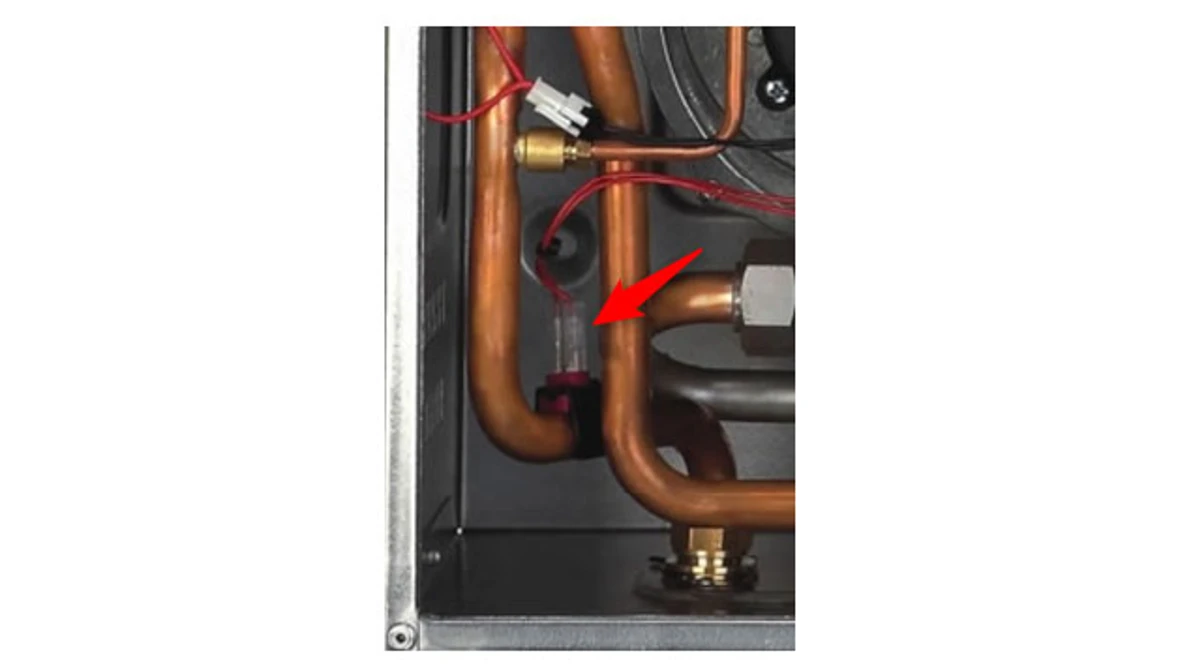
- Ensure the two red wires leading to the sensor are connected tightly and the sensor is firmly clipped to the hot water pipe. The sensor should be clipped to the top, middle of the horizontal section of the hot water pipe. Check the temperature sensor and contacts for corrosion. Clean contacts with light sandpaper or an eraser.
Results:
- If corroded badly, the sensor will need to be replaced. You can find the part number for the temperature sensor through our Aftermarket Ressource Center.
- If everything is clean and connected as it should be, go to step 3.
Step 3
- Ohm out the sensor using the temperature sensor chart in the manual to compare the temperature of the water to the K ohm reading of the sensor. This can be completed by removing the wires from the sensor and placing the probes of the meter on the metal tabs on the sensor.
- Does the K ohm reading match?
Results:
- Yes - Contact the Bosch technical support specialists.
- No - The sensor is bad and needs to be replaced. The part number for the sensor can be found in our Aftermarket Resource Center
E2 Error
E2 Error
Tools Needed
Digital Multi-meter
Basic hand tools (wrench, screwdriver, etc.)
Error Code Information
| Models |
250SX / 250SXO GWH 635ES / GWH 635ESO 2400E / 2400EO |
| Error Code | E2 |
| Error Code Meaning |
Inlet temperature sensor fault An E2 error indicates a problem related to the cold water temperature sensor (located on the cold water pipe feeding the heat exchanger). |
| Possible Causes | The sensor may be sensing temperature outside normal parameters or the sensor itself may be defective. |
Troubleshooting Steps
DO NOT automatically assume a bad sensor. The error may be legitimate and the heater may be trying to tell us that it is sensing temperatures out of range.
Step 1. Has the unit ever been maintained/serviced?
Results:
- Yes - Go to step 2
- No - Service the unit by doing a descale treatment and removing the heat exchanger to clean the burn chamber. The heat exchanger can be cleaned by using water from a hose and brushing off any debris from the burner bed while being careful of the ceramat layer (like a felt layer) on the burner itself. If the ceramat is damaged, the burner should be replaced. The part number for the burner can be found in the Aftermarket Resource Center.
Step 2
- Ensure the two red wires leading to the sensor are connected tightly and the sensor is firmly clipped to the hot water pipe.
- The sensor should be clipped to the top, middle of the horizontal section of the hot water pipe. Check the temperature sensor and contacts for corrosion. Clean contacts with light sandpaper or an eraser.
Results:
- If corroded badly, the sensor will need to be replaced. The part number for the sensor can be found in our Aftermarket Resource Center.
- If everything is clean as connected as it should be, go to step 3.
Step 3
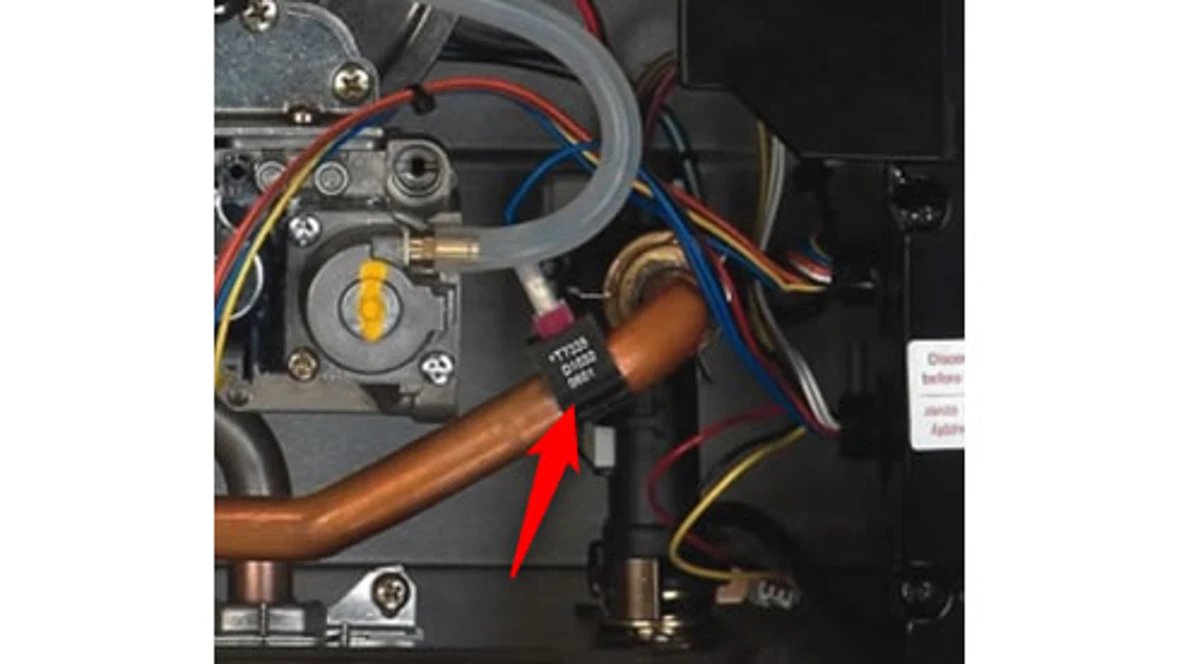
- The temperature sensors are the same on both the hot and cold water pipes. If you suspect a bad sensor, you can swap the hot and cold water sensor as a test (swap the sensors, not the wires).
Results:
- If swapping the sensors changes the error to A7, this indicates a bad sensor that should be replaced. The part number for the sensor can be found in our Aftermarket Resource Center.
- If the error code doesn't change, go to step 4.
Step 4
- Ohm out the sensor using the temperature sensor chart in the manual to compare the temperature of the water to the K ohm reading of the sensor. This can be completed by removing the wires from the sensor and placing the probes of the meter on the metal tabs on the sensor.
- Alternately, you can clip both sensors on the same water pipe and take resistance readings off the sensors. Both sensors should be reading roughly the same resistance – if not, one sensor may be defective.
- Does the K ohm reading match?
Results:
- Yes - Contact the Bosch technical support specialists.
- No - The sensor is bad and needs to be replaced. The part number for the sensor can be found in our Aftermarket Resource Center
E9 Error
E9 Error
Tools Needed
Digital Multi-meter
Basic hand tools (wrench, screwdriver, etc.)
Error Code Information
| Models |
250SX / 250SXO GWH 635ES / GWH 635ESO 2400E / 2400EO |
| Error Code | E9 |
| Error Code Meaning |
Temperature limiter opened circuit (overheat) An E9 error indicates a problem related to the (green and white) overheat sensor (ECO) mounted on the upper right corner of the heat exchanger. The sensor is a safety device that is designed to break a circuit if it senses temps over 220 °F (104 °C). The sensor should reset itself after the heater has cooled off, but the error will still need to be reset with the reset button. |
| Possible Causes | E9 errors are typically caused by scale (mineral deposit) build-up in the heat exchanger and are often accompanied by banging or knocking noises from the heater. |
Troubleshooting Steps
DO NOT jump out the sensor. Jumping the sensor removes the critical safety circuit from the heater and puts the heater at risk of fire or explosion.
Step 1. Does the code reset after the unit cools down?
Results:
- Yes - Go to step 2
- No - The sensor is faulty and needs to be replaced. The part number can be found through our Aftermarket Resource Center.
Step 2. Has the machine been maintained?
Results:
- Yes - Contact the Bosch technical support specialists.
- No - Service the unit by doing a descale treatment and removing the heat exchanger to clean the burn chamber. The heat exchanger can be cleaned by using water from a hose and brushing off any debris from the burner bed while being careful of the ceramat layer (like a felt layer) on the burner itself. If the ceramat is damaged, the burner should be replaced. The part number for the burner can be found in the Aftermarket Resource Center.
EA Error
EA Error
Tools Needed
Digital Multi-meter
Basic hand tools (wrench, screwdriver, etc.)
Manometer
Error Code Information
| Models |
250SX / 250SXO GWH 635ES / GWH 635ESO 2400E / 2400EO |
| Error Code | EA |
| Error Code Meaning |
No ionization during safety time (safety time out) An EA error indicates that no burner flame is detected during an attempted start-up. The heater makes tree ignition attempts before going to an EA error code. |
| Possible Causes | EA can have a variety of causes, usually gasrelated. EA can be caused by no gas, air in the gas lines, low gas pressure, or a damaged gas valve. EA can also be caused by ignition spark or by a bad flame sensor. |
Troubleshooting Steps
Step 1. Is the gas pressure inside required ranged?
- Attached a manometer to the left hand port of the gas valve to get the gas pressure. Bulletin with details is here.
Results:
- Yes - Move to step 2.
- No - Gas supply needs to be fixed
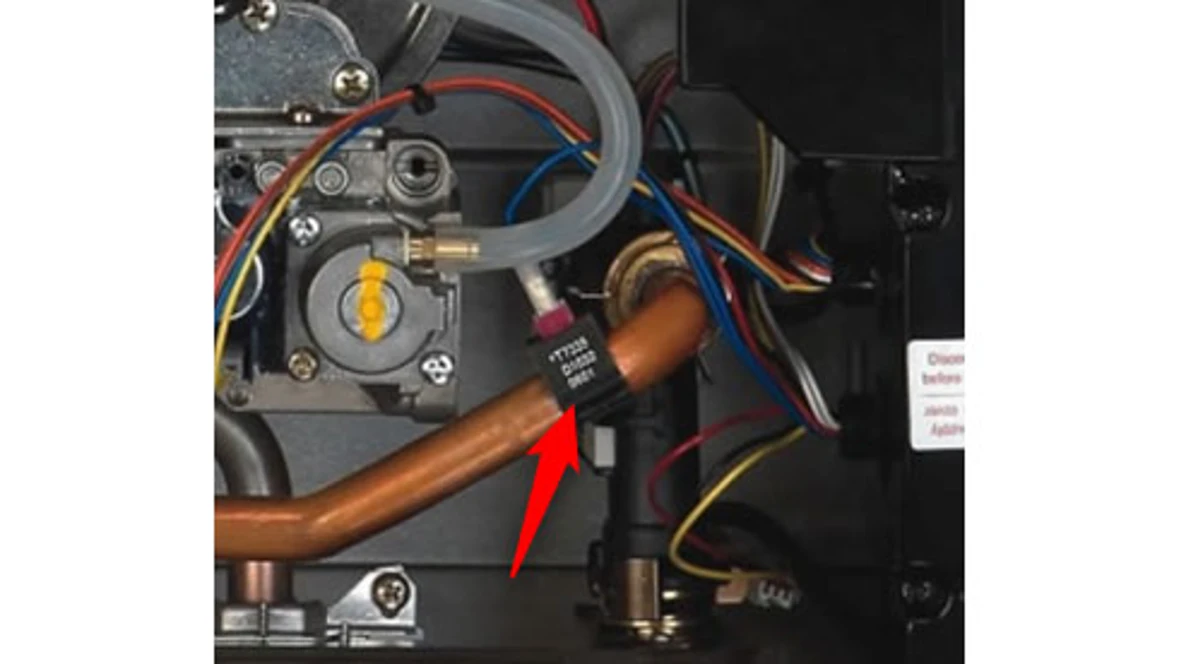
NG = 5" - 14" water column, LP = 11" - 14" water column.
Step 2. Is the combustion chamber clean?
- Yes - Contact the Bosch technical support specialists.
- No - Service the unit by doing a descale treatment and removing the heat exchanger to clean the burn chamber. The heat exchanger can be cleaned by using water from a hose and brushing off any debris from the burner bed while being careful of the ceramat layer (like a felt layer) on the burner itself. If the ceramat is damaged, the burner should be replaced. The part number for the burner can be found in the Aftermarket Resource Center.
EC Error
EC Error
Tools Needed
Digital Multi-meter
Basic hand tools (wrench, screwdriver, etc.)
Manometer
Gas Analyzer
Error Code Information
| Models |
250SX / 250SXO GWH 635ES / GWH 635ESO 2400E / 2400EO |
| Error Code | EC |
| Error Code Meaning |
Ionization failure while burning (lose of burner flame) EC occurs when the heater senses a loss of flame (no ionization) during use. The ionization signal momentarily disappears more than 3 times in less than 30 seconds. |
| Possible Causes | EC typically occurs because of gas-related issues such as low gas pressures, improper air/ fuel (CO2) adjustments, dirty electrodes or a damaged gas valve. EC can be accompanied by groaning noises during start-up. |
Troubleshooting Steps
Step 1. Is the gas pressure inside required ranged?
- Have the caller attach their manometer to the left hand port of the gas Valve to get the gas pressure. Bulletin with details is here.
Results:
- Yes - Move to step 2.
- No - Gas supply needs to be fixed
NG = 5" - 14" water column, LP = 11" - 14" water column.
Step 2. Is the combustion chamber clean?
- Yes - Contact the Bosch technical support specialists.
- No - Service the unit by doing a descale treatment and removing the heat exchanger to clean the burn chamber. The heat exchanger can be cleaned by using water from a hose and brushing off any debris from the burner bed while being careful of the ceramat layer (like a felt layer) on the burner itself. If the ceramat is damaged, the burner should be replaced. The part number for the burner can be found in the Aftermarket Resource Center.
E0 Error
E0 Error
Tools Needed
Digital Multi-meter
Basic hand tools (wrench, screwdriver, etc.)
Error Code Information
| Models |
250SX / 250SXO GWH 635ES / GWH 635ESO 2400E / 2400EO |
| Error Code | E0 |
| Error Code Meaning |
Internal software/hardware failure E0 indicates a problem with a control board. A single E0 does not indicate a bad board, but repeated E0 errors may indicate a control board needs to be replaced. |
| Possible Causes | E0 may be caused by a bad circuit board or by a customer pressing the wrong combination of buttons while trying to reset an error or changing a setting on the heater. |
Troubleshooting Steps
Step 1. Is the machine plugged into an outlet by itself and on a dedicated circuit?
Results:
- Yes - Go to step 2.
- No - Try plugging the unit into another outlet that is on it's own dedicated circuit.
Step 2. Is the control board getting 120 VAC (-/+ 10%)?
- This can be tested where the plug is wired into the control box.
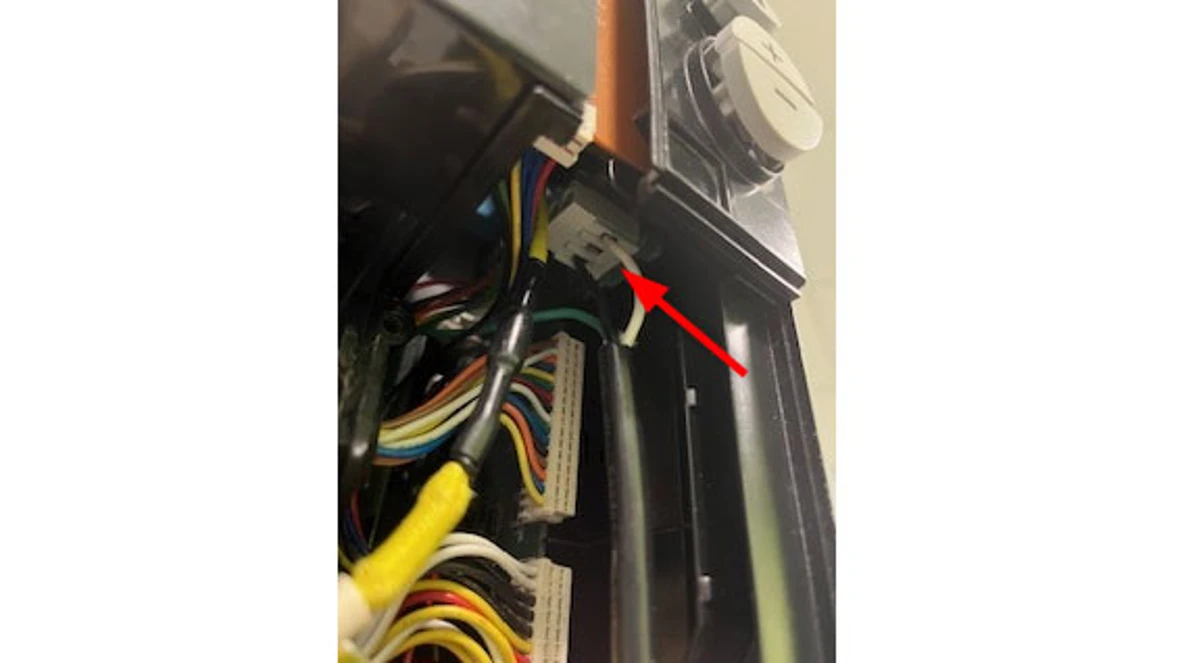
Results:
- Yes - Could be a bad control. Reset the unit and if it happens again, the control will need to be replaced. You can find the part number through our Aftermarket Resource Center.
- No - Have the power supply issue fixed.
F7 Error
F7 Error
Tools Needed
Digital Multi-meter
Basic hand tools (wrench, screwdriver, etc.)
Error Code Information
| Models |
250SX / 250SXO GWH 635ES / GWH 635ESO 2400E / 2400EO |
| Error Code | F7 |
| Error Code Meaning |
Ionization error (Flame sensing at standby) F7 indicates the heater thinks it is sensing burner flame while the heater is in standby mode. |
| Possible Causes |
F7 may indicate a damaged gas valve or a damaged flame sensor. This damage would most likely be caused by rain or condensate in the heater |
Troubleshooting Steps
Step 1. Has the flame sensor been removed and cleaned or replaced?
Results:
- Yes - Move to step 2.
- No - Remove the flame sensor to clean and inspect.
Step 2. Is the combustion chamber wet?
- Yes - Moisture is causing the code. Service the unit by removing the heat exchanger to check for leaks.
If there are any leaks, replace the heat exchanger. You can find the part number through - No - Update the record and transfer the qualified and onsite caller to the technical support specialists.
FA Error
FA Error
Tools Needed
Digital Multi-meter
Basic hand tools (wrench, screwdriver, etc.)
Manometer
Error Code Information
| Models |
250SX / 250SXO GWH 635ES / GWH 635ESO 2400E / 2400EO |
| Error Code | FA |
| Error Code Meaning |
Gas leakage error (gas valve does not close gas circuit) An FA error indicates the heater thinks it is still sensing flame after the heater shuts down. |
| Possible Causes |
FA may indicate a damaged gas valve or a damaged flame sensor. This damage would most likely be caused by rain or condensate in the heater. |
Troubleshooting Steps
Step 1. Do you see flame in the combustion chamber when the unit is shutting down after water flow stops?
Results:
- Yes - Move to step 2.
- No - Service the unit by removing the flame sensor to clean and inspect and removing the heat exchanger to clean the burn chamber. The heat exchanger can be cleaned using water from a hose and brushing off any debris from the burner bed while being careful of the ceramat (like a felt covering) on the burner itself. If the ceramat is damaged, the burner should be replaced. You can find the part number for the burner through our Aftermarket Resource Center.
Step 2. Is the gas pressure inside required ranged?
- Attach a manometer to the left hand port of the gas valve to get the gas pressure.
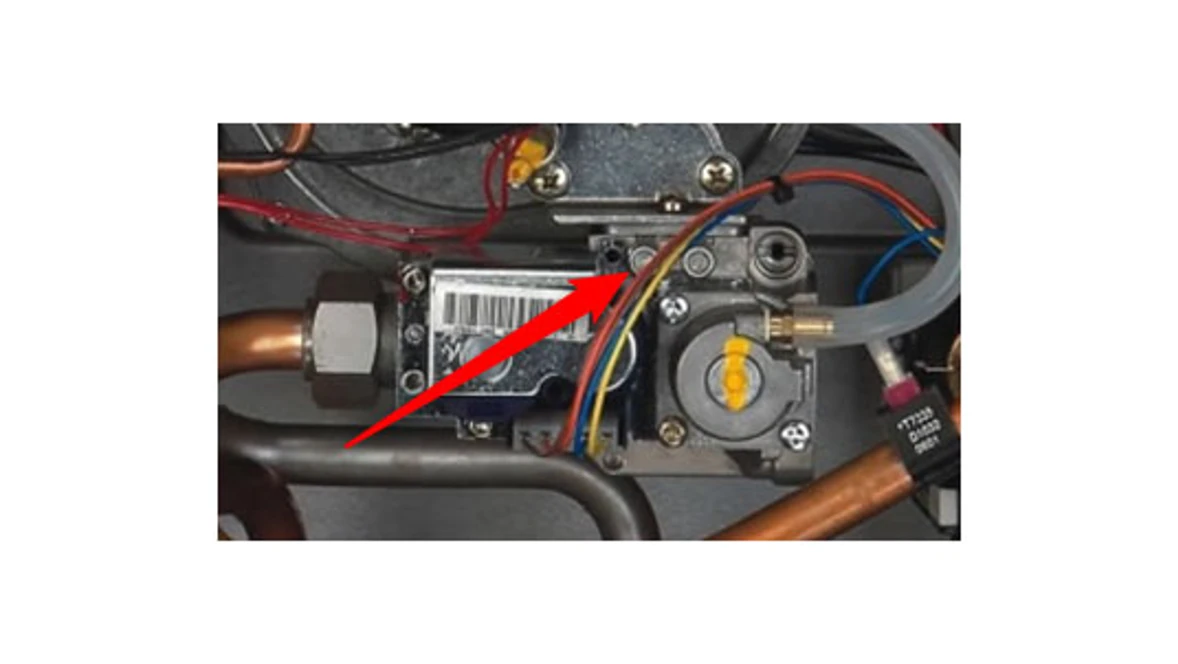
- Have the caller check gas pressure (NG = 5" - 14" water column, LP = 11" - 14" water column) and verify that the gas valve is dry.
- You can remove the cloud shaped plate with 3 screws just above the gas valve to confirm the existence of moisture in the gas valve.
Results:
- If the gas pressure is correct, the flame shuts off when water flow stops and there are no signs of moisture in the gas valve, contact the Bosch technical support specialists.
- If there is moisture behind the cloud shaped plate just above the gas valve, it's typically a sign of a leaking heat exchanger. Pull the heat exchanger to check for leaks and any are found, contact the Bosch technical support specialists.
8E Error
8E Error
Tools Needed
Digital Multi-meter
Basic hand tools (wrench, screwdriver, etc.)
Error Code Information
| Models |
250SX / 250SXO GWH 635ES / GWH 635ESO 2400E / 2400EO |
| Error Code | 8E |
| Error Code Meaning |
Electronic “noise” on circuit board. An 8E error indicates electronic “noise“ on the circuit board. A single 8E error does not indicate a bad board, but repeated errors may indicate a control board needs to be replaced. |
| Possible Causes | 8E can be caused by a customer pushing the wrong combination of buttons or may be caused by a defect on the circuit board. |
Troubleshooting Steps
Step 1. Does the code go away when reset?
Results:
- Yes - verify power supply, test operation of machine.
- No - Control will need to be replaced. The part number for the control can be found in our Aftermarket Resource Center.
Burner does not ignite when hot
Burner does not ignite when hot
- If the display is blank, verify power to outlet. (120VAC/60Hz properly grounded circuit required). Verify that the heater power button is pressed ON.
- Verify the fuses in the control board are good. To access fuses, the control board must be removed.
- Make sure cold water inlet connection is plumbed to the right side of heater when facing unit.
- A minimum of 0.65 gallons per minute (GPM) (2,5 l/m) is required to activate the heater. A quart container should fill in 23 seconds or less, from hot water tap only, to activate heater.
- Clean inlet filter screen. Inspect the water path for obstructions. Make sure all showerheads, faucet aerators and whole house filters are clear of debris.
- The heater activates when the water flow through the unit is at or above the required minimum of 0.65 GPM (2,5 l/m). A crossover in the hot and cold plumbing pipes creates back pressure on the water flowing through the heater. Therefore, a higher flow rate than normal is needed to force the heater to activate. To check for a plumbing crossover, shut off the cold water supply to the water heater. Then open all of the hot water taps served by the heater. Wait 10 minutes and check for water flow at each tap. There should be no water flowing. Any continuous flow of water, small or large, indicates a crossover is present and must be corrected. Consult a professional plumber for help in correcting a crossover. Failing single lever faucet mixing valves are common causes of plumbing crossovers.
- With the power button pressed to OFF and the power supply cord unplugged, remove the unit's front cover. Check wire connections between the water valve, control unit and electrode set.
- Water heater in solar mode. If inlet water temperatures exceed the water heater's set temperature, the burners will not ignite and the solar mode indicator will show on the display.
Water is too hot
Water is too hot
- Selected temperature on the unit is too high. To lower output temperature, see chapter 5.4, page 32 of the manual.
- Clean inlet filter screen.
- Inspect the water path for obstructions. Make sure all showerheads, faucet aerators and whole house filters are clear of debris.
- Confirm that the heater's gas type coincides with the type of gas being supplied.
- Avoid restrictive outlets. Clean all showerheads and faucet aerators. It may be necessary to upgrade to higher flow rate shower heads if allowable by local code.
- In areas where the water has a high mineral content, periodic descaling may necessary.
- Ensure the outlet temperature sensor is making contact and firmly mounted on the hot water pipe.
Water is not hot enough
Water is not hot enough
- Selected temperature on the unit is too low. To raise output temperature, see chapter 5.4, page 32 of the manual.
- Clean inlet filter screen. See chapter 6.1, page 34 of the manual to increase flow through the heater.
- Inspect the water path for obstructions. Make sure all showerheads, faucet aerators and whole house filters are clear of debris.
- Confirm the heater's gas type coincides with the type of gas being supplied.
- Check inlet gas particle screen for blockage at gas inlet connection on bottom of unit.
- Verify gas pressure is in accordance with specifications in chapter 3.13, page 29 of the manual. A gas pressure reading is needed to proceed further.
- Contact your original installer or a local certified gas technician to obtain this reading.
- Cold water is mixing into the hot water lines (plumbing crossover). A plumbing crossover can unintentionally mix cold water with the hot water leaving the heater. The end result is a cooler water temperature than desired. To check for a plumbing crossover, shut off the cold water supply to the water heater. Then open all of the hot water taps served by the heater. Wait 10 minutes and check all taps for water flow. There should be no water flowing. Any continuous flow of water, small or large, indicates a crossover and must be corrected. Consult a professional plumber for help in correcting a crossover. Failing single lever faucet mixing valves are common causes of plumbing crossovers.
- Ensure the temperature sensor is making contact and firmly mounted on the hot water pipe.
Low water flow/pressure
Low water flow/pressure
- Too many hot water applications are being used simultaneously or too much flow is demanded. The water heater will effectively support two 2.0-2.5 GPM shower heads simultaneously or multiple sink applications. Greater draws will result in a water pressure drop and reduced flow at taps.
- Ensure that gas pressure is in accordance with specifications in chapter 3.13, page 29 of the manual. A gas pressure reading is needed to proceed further.
- Contact your original installer or a local certified gas technician to obtain this reading. If gas pressure is inadequate, the water heater will close its motorized water valve, reducing the hot water flow rate in an attempt to reach the selected output temperature.
- If selected temperature on the unit is set too high for the demanded flow rate, the water heater will close its motorized water valve, reducing the hot water flow rate in an attempt to reach the selected output temperature. Lowering the selected temperature will allow the motorized water valve to open up for increased water flow rate.
- Clean inlet filter screen.
- Inspect the water path for obstructions. Make sure all showerheads, faucet aerators and whole house filters are clear of debris.
Hot water temperature fluctuates
Hot water temperature fluctuates
- Hot water is very hot out of the water heater, requiring mixing in cold water in order to attain a useable hot water temperature. The addition of too much cold will overpower hot water flow from the tankless water heater. If this slows the flow through the tankless water heater below its activation point, it will shut off the burners. The end result is nothing but cold water coming out of the outlet. Consult Service Bulletins for a detailed service bulletin on overcoming temperature fluctuations.
- Unbalanced pressure in water lines. Any restriction in the water heater, such as a clogged inlet filter screen, can result in unequal pressures between the cold and hot water lines. In such cases, when mixing in the higher pressure cold water at the tap, the lower pressure hot water can be overpowered. This will shut down the burners because the hot water flow rate fell below the minimum flow rate required for activation. Verify inlet filter screen is clean and clear of debris. See chapter 6.1, page 34 of the manual for inlet filter cleaning instructions.
- Heater deactivated by temperature balancing valves.
- If the outlet water temperature is set too high, the heater can produce temperatures that are too hot. A temperature balance shower valve will automatically mix in cold water to reduce the hot water temperature. In the event of any temperature instability at a fixture using a temperature balancing valve, refer to the valve manufacturer for instructions on internal adjustment setting. An adjustment should be made to minimize the amount of cold water the valve is adding. Additionally, the temperature setting on the heater can be lowered to prevent the temperature balance valve from mixing in too much cold.
- Inlet water pressure is erratic due to fluctuating supply water pressure. For installation on a private well system with the use of a pressure tank, the lowest pressure range setting recommended is 40 - 60 psi (2.75 - 4.15 bar). Consult your installer or local plumber for effective ways to maintain constant water pressure to the appliance when on a well system.
Noisy burner/heater during
Noisy burner/heater during
- Sealed combustion leak. Make sure combustion cover is securely fastened. Ensure the exhaust vent adaptor is properly sealed with supplied gasket.
- Leaky seals create improper combustion resulting in noise.
- Improper venting. Venting that is unsealed, the wrong material, too big in diameter or too long in run will result in unstable burner flames and noise. Ensure venting is in accordance with specifications in chapter 3.3, page 9 of the manual.
- Lack of adequate combustion air. Drawing combustion air from a room area of inadequate size will result in unstable burner flames and noise. Improper piping of combustion air to the outside or insufficient space will result in unstable burner flames and noise. Ensure adequate combustion air is provided from the unit in accordance with specifications in Section 3.4, page 20 Combustion Air Requirements of the manual.
- Cross contamination. Ensure that intake and exhaust terminations maintain required clearances as stated in chapter 3.3, page 9 of the manual. Cross contamination between intake and exhaust may cause unstable burner flames and noise.
- Lack of gas pressure. Inadequate gas pressure will cause the fuel-to-air mixture (CO2) to be out of adjustment. This will result in unstable burner flames and noise. Ensure gas pressure is in accordance with specifications in Section 3.13, page 29 Measuring
- Gas Pressure of the manual. A gas pressure reading is needed to proceed further. Contact your original installer or a local certified gas technician to obtain this reading.
- 6. Verify proper CO2 readings per chapter 6.5, page 36 of the manual. CO2 adjustments must be done by a certified gas technician with a calibrated combustion gas analyzer.
Burner does not ignite when hot water is turned ON
Burner does not ignite when hot water is turned ON
- If the display is blank, verify power to outlet. (120VAC/60Hz properly grounded circuit required). Verify that the heater ON/OFF button is turned ON.
- Verify the fuses in the control board are good. See Section 4.2, page 33 of the installation manual for fuse locations.
- Make sure cold water inlet connection is plumbed to the right side of heater when facing unit. See Fig. 35, page 28 of the manual.
- A minimum of 0.5 gallons per minute (GPM) (1.9 l/m) is required to activate the heater. A quart container should fill in 25 seconds or less to activate heater. In areas of warm inlet water temperatures, the heater may increase activation rate to as high as 1.6 gallons per minute (GPM) to prevent overshooting of set temperature.
- Clean inlet filter screen per chapter 6.2, page 38 of the manual.
- Inspect the water path for obstructions. Make sure all showerheads, faucet aerators and whole house filters are clear of debris.
- The heater activates when the water flow through the unit is at or above the required minimum of 0.5 GPM (1.9 l/m). A crossover in the plumbing creates back pressure on the water flowing through the heater. Therefore, a higher flow rate than normal is needed to force the heater to activate. To check for a plumbing crossover, shut off the cold water supply to the water heater. Then open all of the hot water taps served by the heater. Wait 10 minutes and check for water flow at taps. There should be no water flowing. Any continuous flow of water, small or large, indicates a crossover is present and must be corrected. Consult a professional plumber for help in correcting a crossover. Failing single lever faucets and mixing valves are common causes of plumbing crossovers.
- With the ON/OFF switch turned to OFF (O) position and the power supply cord unplugged, remove the unit's front cover (See Page 7. Fig 3 of the manual). Check wire connections between the water valve, control unit and electrode set. See chapter 12.2, page 56 of the manual for location of these parts.
- Water heater in solar mode. If inlet water temperatures exceed the water heater's set temperature, the burners will not ignite and the solar mode indicator will show on the display. See Fig. 52, page 34 of the manual.
Water is too hot
Water is too hot
Water is too hot
- Selected temperature on the unit is set too high. To lower output temperature, see chapter 5.4, page 35 of the manual.
- Clean inlet filter screen per chapter 6.1, page 37 of the manual.
- Inspect the water path for obstructions. Make sure all showerheads, faucet aerators and whole house filters are clear of debris.
- Confirm the heater's gas type coincides with the type of gas being supplied. See Fig. 2, page 6 of the manual for location of rating plate.
- Avoid restrictive outlets. Clean all showerheads and faucet aerators. It may be necessary to upgrade to higher flow rate shower heads if allowable by local code.
- In areas where the water has a high mineral content, periodic descaling may necessary. See chapter 6.3, page 38 of the manual for directions.
- Ensure the outlet temperature sensor is making contact and firmly mounted on the hot water pipe.
Water is not hot enough
Water is not hot enough
- Selected temperature on the unit is too low. To raise output temperature, see chapter 5.4, page 35 of the manual.
- Clean inlet filter screen. See chapter 6.1, page 37 of the manual.
- Inspect the water path for obstructions. Make sure all showerheads, faucet aerators and whole house filters are clear of debris.
- Confirm the heater's gas type coincides with the type of gas being supplied. See Fig. 2, page 6 of the manual for location of rating plate.
- Check inlet gas particle screen for blockage at gas inlet connection on bottom of unit.
- Verify gas pressure is in accordance with specifications in chapter 3.13, page 32 of the manual. A gas pressure reading is needed to proceed further. Contact your original installer or a local certified gas technician to obtain this reading.
- Cold water is mixing into the hot water lines (plumbing crossover). A plumbing crossover can unintentionally mix cold water with the hot water leaving the heater. The end result is a cooler water temperature than desired. To check for a plumbing crossover, shut off the cold water supply to the water heater. Then open all of the hot water taps served by the heater. Wait 10 minutes and check all taps for water flow. There should be no water flowing. Any continuous flow of water, small or large, indicates a crossover and must be corrected. Consult a professional plumber for help in correcting crossover. Failing single lever faucets and mixing valves are common causes of plumbing crossovers.
- Ensure the outlet temperature sensor is making contact and firmly mounted on the hot water pipe.
Low water flow/pressure
Low water flow/pressure
- Too many hot water applications are being used simultaneously or too much flow is demanded. The water heater will effectively support two 2.0-2.5 GPM shower heads simultaneously or multiple sink applications. Greater draws will result in a water pressure drop and reduced flow at taps.
- Ensure that gas pressure is in accordance with specifications in chapter 3.13, page 32 of the manual. A gas pressure reading is needed to proceed further. Contact your original installer or a local certified gas technician to obtain this reading. If gas pressure is inadequate, the water heater will close its motorized water valve, reducing the hot water flow rate in an attempt to reach the selected output temperature.
- If selected temperature on the unit is set too high for the demanded flow rate, the water heater will close its motorized water valve, reducing the hot water flow rate in an attempt to reach the selected output temperature. Lowering the selected temperature will allow the motorized water valve to open up for increased water flow rate.
- Clean inlet filter screen per chapter 6.1, page 37 of the manual.
- Inspect the water path for obstructions. Make sure all showerheads, faucet aerators and whole house filters are clear of debris.
Hot water temperature fluctuates at tap
Hot water temperature fluctuates at tap
- Hot water is very hot out of the tap, requiring mixing of cold water in order to attain a usable hot water temperature. The addition of too much cold water will overpower the hot water flow from the tankless water heater. This slows the flow within the tankless water heater, decreasing it below activation point, which shuts off the burners. The end result is nothing but cold water coming out of the outlet.
- Consult our service bulletin list for overcoming temperature fluctuations.
- Unbalanced pressure in water lines. Any restriction in the water heater, such as a clogged inlet filter screen, can result in unequal pressures between the cold and hot water lines. In such cases, when mixing in the higher pressure cold water at the tap, the lower pressure hot water can be overpowered. This will shut down the burners because the hot water flow rate fell below the minimum flow rate required for activation. Verify inlet filter screen is clean and clear of debris. See chapter 6.1, page 37 of the manual for inlet filter cleaning instructions.
- Heater deactivated by temperature balancing valves. If the outlet water temperature is set too high, the heater can produce temperatures that are too hot. A temperature balance shower valve will automatically mix in cold water to reduce the hot water temperature. In the event of any temperature instability at a fixture using a temperature balancing valve, refer to the valve manufacturer for instructions on internal adjustment setting. An adjustment should be made to minimize the amount of cold water the valve is adding. Additionally, the temperature setting on the heater can be lowered to prevent the temperature balance valve from mixing in too much cold water.
- Inlet water pressure is erratic due to fluctuating supply water pressure. For installation on a private well system with the use of a pressure tank, the lowest pressure range setting recommended is 40-60 psi (2.75 - 4.15 bar). Consult your installer or local plumber for effective ways to maintain constant water pressure to the water heater when on a well system.
Noisy burner/heat during operation
Noisy burner/heat during operation
- Sealed combustion leak. Make sure combustion cover is securely fastened. Ensure the exhaust vent adaptor is properly sealed with supplied gasket. Leaky seals create improper combustion resulting in noise.
- Improper venting. Venting that is unsealed, the wrong material, too big in diameter or too long in run will result in unstable burner flames and noise. Ensure venting is proper and in accordance with specifications in chapter 3.3, page 9 of the manual.
- Lack of adequate combustion air. Drawing combustion air from a room area of inadequate size will result in unstable burner flames and noise. Improper use of piping for combustion air will result in unstable burner flames and noise. Ensure adequate combustion air is provided to the unit in accordance with specifications in
- Section 3.4, page 23 of the manual, Combustion Air Requirements.
- Cross contamination. Ensure that intake and exhaust terminations maintain minimum required clearances stated in the manual. Cross contamination between intake and exhaust may cause unstable burner flames and noise.
- Lack of adequate gas pressure. Inadequate gas pressure will cause the fuel-to-air mixture (CO2) to be out of adjustment. This will result in unstable burner flames and noise. Ensure gas pressure is in accordance with specifications in section 3.13, page 32 of the manual Measuring Gas Pressure. A gas pressure reading is needed to proceed further. Contact your original installer or a local certified gas technician to obtain this reading.
- Verify proper CO2 readings per chapter 6.4, page 39 of the manual.
- CO2 adjustments must be done by a certified gas technician with a calibrated combustion gas analyzer.
Pilot does not light
Pilot does not light
- Verify gas supply is on at Natural Gas meter or Propane Tank. Make sure all manual gas shut off valves are in the open position. Have licensed gas technician confirm adequate gas pressure at the inlet tap (chapter 3.9 of the manual). If gas is not present, verify manufacturer supplied Maxitrol regulator is in the upright position. The arrow on the back of the regulator should point in the same direction as gas flow.
- If the unit was just installed or the gas lines have been worked on, there may be air in the gas line. Centered in the sparking position, hold down the gas control slide button while hitting the pilot igniter button every few seconds. It may take several minutes to bleed air out of the gas line.
- Verify a spark is being thrown at pilot area while gas control slide button, centered in the single flame position, is being firmly depressed. Repeatedly push in pilot igniter button to light the pilot. If no spark is present, verify proper wire connection to the electrode.
- Pilot assembly may be blocked. Clean or replace the pilot orifice (chapter 5.3 of the manual).
Pilot lights but goes out when button is released
Pilot lights but goes out when button is released
- When lighting pilot ensure the gas control slide button is fully depressed and held down for at least 20 seconds after pilot is lit.
- Verify gas type indicated in rating sticker located on right hand side of cover, coincides with the gas type you are using. NG is a natural gas unit and LP is for liquid propane.
- If using a power vent, check the safety spillage switch reset button (the safety spillage switch is wired through the water heater's thermocouple circuit). The spill switch should be located at top of water heater close to draft diverter (Consult manual that came with powervent).
- Check all connections of the pilot safety circuit. The pilot safety circuit consists of a thermocouple, overheat sensor (ECO), flue gas sensor, safety spillage switch(models with Powervents only) and the electromagnet (See parts diagram for locations). Clean sensor connections with light sandpaper if corrosion is evident. The electromagnet connection is 5mm nut from the thermocouple which screws into a larger 17mm nut. Tighten both nuts snugly but do not over tighten.
- Pilot flame should be blue in color and completely engulfing the tip of the thermocouple. If not, have a licensed gas technician verify gas pressure is in accordance with manufacturer's specifications (chapter 3.9 in the manual) and clean or replace the pilot orifice (chapter 5.3 of the manual).
- Have a licensed gas technician verify the proper operation of the thermocouple by measuring the millivoltage from the thermocouple lead to ground. The proper reading should be 24mVDC or greater. If the reading is lower, the thermocouple may be defective. Call Bosch Thermotechnology for further instructions.
Pilot goes out during or after hot water use
Pilot goes out during or after hot water use
- Pilot outage during use typically results from the unit's safety overheat/high limit sensors interrupting the pilot circuit. The 520 PN does not have a thermostat. If inlet water is preheated, the unit will overheat, stopping the flow of gas. Plumb inlet with a cold water line only.
- Failure to vent properly by reducing pipe diameter, improper use of elbows or not meeting required vent length are common causes that deactivate the pilot safety circuit. Confirm venting is in accordance with manufacturer's specifications (see chapter 3.7 of the manual).
- Confirm the combustion air requirements are being met in accordance with manufacturer's specifications (see chapter 3.6 of the manual). Proper venting and combustion air will ensure a proper draft.
- Confirm that the burners in the water heater go off immediately when the hot water is turned off. If they remain on or shut down slowly, then the overheat sensor (ECO) will interrupt the pilot circuit and shut off all gas to the heater. The water valve assembly, which actuates the burners, may be dirty and require periodic maintenance (every 2 - 5 years depending on water quality and use) (see chapter 5.2 of the manual).
- Check all connections of the pilot safety circuit. The pilot safety circuit consists of a thermocouple, overheat sensor (ECO), flue gas sensor, safety spillage switch(models with Powervents only) and the electromagnet (See parts diagram for locations). Clean sensor connections with light sandpaper if corrosion is evident. The electromagnet connection is 5mm nut from the thermocouple which screws into a larger 17mm nut. Tighten both nuts snugly but do not over tighten.
- Verify pilot flame completely engulfs the thermocouple tip. If pilot is too small, clean pilot orifice (see chapter 5.3 of the manual).
- If the water has a high mineral content, the heat exchanger may be scaled internally. This restricts the water path, causing the water to over heat which shuts all gas off to the heater. Instructions for descaling the heat exchanger are available in the service bulletin list.
- If steps 1 through 7 do not correct the problem, then confirm that the gas pressure is adequate. Ensure gas pressure is in accordance with manufacturer's specifications (see chapter 3.9 of the manual). A gas pressure reading is needed to proceed further. Contact your original installer or a licensed gas technician to obtain this reading.
Burners do not light with water flow
Burners do not light with water flow
- Verify the pilot is lit.
- Verify the gas control slide button is in middle position.
- Verify the cold water supply is connected to the right side of the heater.
- Close installer supplied cold water shut off valve (if none installed, install before proceeding). Open all hot water taps supplied by the heater. Wait 5 minutes and check all taps. Any water running is a sign of a plumbing crossover. Consult a local plumber or service person for help in correcting a plumbing crossover.
- Verify flow through the water heater is sufficient. Turn temperature adjustment knob all the way clockwise. Fully open a hot water faucet and fill a quart container. If the container fills in 30 seconds or less, the flow rate (1/2 gallon per minute) is sufficient to activate the heater.
- Inspect the water path outside of the heater for obstructions. Make sure all outlets (i.e. showerheads, faucet aerators and whole house filters) are clear of debris. Also, the water heater's inlet filter screen should be inspected and cleaned (see chapter 5.2 of the manual).
- The water valve assembly, which actuates the burners, requires periodic maintenance (every 2 - 5 years depending on water quality and use) (see chapter 5.2 of the manual).
Hot water temperature fluctuates at tap
Hot water temperature fluctuates at tap
- Close off installer supplied cold water shut off valve (if none installed, install before proceeding). Open all hot water taps supplied by the heater. Wait 5 minutes and check all taps. Water running is a sign of a plumbing cross-over. Consult a local plumber or service person for help in correcting a plumbing crossover.
- Check for a clogged inlet water filter screen (see chapter 5.2 of the manual). Hot water is very hot out of the tap, requiring a lot of cold water to be added with it in order to attain a useable hot water temperature. The addition of too much cold will overpower and slow the flow within the tankless water heater, decreasing it below activation point, which shuts off the burners. The end result is nothing but cold water coming out of the outlet. Reduce the need for cold water mix by setting the gas slide control button towards the single flame position for lower hot water temperatures. If the problem persists, go to our service bulletin list on this problem.
- The 520 PN is designed to modulate gas flow to the burners when water flow varies. If the water pressure in the home is erratic and the water flow is not consistent while a tap is opened, then the temperature of hot water will fluctuate. The minimum water pressure for the home should be 30psi or greater. For installation on a private well system with the use of a pressure tank, the lowest pressure range setting recommended is 30-50 psi (2.07-3.45 bar). The use of a pressure reducing/regulating valve before the water heater (directly after pressure tank on well systems) is an effective way to maintain constant water pressure to the water heater. Watts brand 25AUB-¾" or N35B-¾" pressure reducing/regulating valves or equivalent are suggested.
- If the inlet water temperature is not steady then the hot water temperature from the water heater will fluctuate. the 520 PN modulates its burners when the flow rate is changed; it does not have a thermostat and will not adjust to changes in inlet water temperature.
- If the inlet water temperature to the water heater is above 70°F, the heater may produce outlet temperatures that are too hot for most users. A temperature balance shower valve can automatically mix in cold water to reduce such hot water temperature. This can slow the flow within the tankless water heater, decreasing it below activation point, which shuts off the burners. In the event of any temperature instability with the use of a temperature balance shower valve, refer to shower valve manufacturer's instructions for internal adjustment setting. An adjustment should be made to minimize the amount of cold water the valve is adding.
- The gas pressure also needs to be stable and adequate. Ensure gas pressure is in accordance with manufacturer's specifications (see chapter 3.9 of the manual). A gas pressure reading is needed to proceed further. Contact your original installer or a local certified gas technician to obtain this reading.
- A water valve, which has not been serviced, may be struggling to keep the gas valve open. The water valve requires periodic maintenance (every 2-5 yrs depending on water quality and use) (see chapter 5.2 of the manual).
Water is too hot
Water is too hot
- Verify gas type indicated in rating sticker located on right-hand side of cover, coincides with the gas type you are using. NG is a natural gas unit and LP is for liquid propane.
- Adjust the gas control slide button from three flame position towards the one flame position for cooler temperatures. If the water is still too hot, the temperature adjustment knob on the water heater maybe set too high. Lower the setting and test water temperature. This dial turns counter clockwise for lower temperatures and clockwise for higher temperatures.
- Inlet water is preheated. This model does not have a thermostat and thus will not modulate flame height in order to prevent over heating. It is designed for a cold water feed only. Replumb the heater with cold water to the inlet.
- Increase the flow rate. Restrictions in the water path can slow the flow of water through the heater, resulting in very hot outlet temperatures. Restrictive showerheads and faucet aerators should be cleaned out or upgraded with less restrictive ones. In addition, the water heater's inlet filter should be cleaned and inspected (see chapter 5.2 of the manual).
- If water is still too hot, consult our service bulletins list to lower outlet temperatures further.
- If the water has a high mineral content, the heat exchanger may be scaled internally. This restricts the water path, causing the water to boil and produce extremely hot temperatures. Instructions for descaling the heat exchanger are available in our list of service bulletins.
Water is not hot enough
Water is not hot enough
- Verify gas type indicated in rating sticker located on right-hand side of cover, coincides with the gas type you are using. NG is a natural gas unit and LP is for liquid propane.
- Flow at one particular tap is too great or too many fixtures are running at one time. Lower flow to stay within heater's specifications.
- Ensure the gas control slide button is all the way to the right. In addition, the temperature adjustment knob on water heater maybe set too low. Turn the knob clockwise for higher temperatures and rest the water temperature.
- Shut off installer supplied cold water shut off valve (if none installed, install before proceeding). Open all hot water taps supplied by the heater. Wait 5 minutes and check all taps. Any water running is a sign of a plumbing crossover. Consult a local plumber or service person for help in correcting a plumbing crossover.
- Inspect the water path outside of the heater for obstructions. Make sure all outlets (i.e. showerheads, faucet aerators and whole house filters) are clear of debris. Also, the water heater's inlet filter screen should be inspected and cleaned (see chapter 5.2 of the manual.)
- The water valve may be dirty, prohibiting it from fully opening the gas valve. This part needs to be periodically serviced (every 2-5 yrs depending on water quality and use)(see chapter 5.2 of the manual).
- Gas pressure is too low. Ensure gas pressure is in accordance with manufacturer's specifications (see chapter 3.9 of the manual). A gas pressure reading is needed to proceed further. Contact your original installer or a local certified gas technician to obtain this reading.
Burners ignite without hot water flow
Burners ignite without hot water flow
- The water valve may be dirty and sticking, prohibiting it from fully closing the gas valve. This part needs to be periodically serviced (every 2-5 yrs depending on water quality and use) (see chapter 5.2 of the manual).
Low hot water pressure
Low hot water pressure
- Confirm adequate flow rate through the unit. With cold supply shut off to the unit, disconnect hot outlet side to the unit. Place a half gallon jug under hot outlet to catch water. Open cold supply and measure flow rate out of the unit. With temperature adjustment knob set all the way clockwise, the flow rate should be close to 2gpm, filling the jug in 15 seconds. With the temperature adjustment knob set all the way counterclockwise, the flow rate should be close to 4gpm, filling the jug in 7 seconds. If the flow rate is not adequate, inspect and clean the inlet filter screen (see chapter 5.2 of the manual).
- Confirm the incoming water pressure to the unit is above the required 30psi.
- Inspect the water path outside of the heater for obstructions. Make sure all outlets (i.e. showerheads, faucet aerators and whole house filters) are clear of debris.
- Be sure to run only one major application at a time with this unit. Opening too many taps at one time can disperse water flow resulting in a diminished flow/pressure at all outlets.
- If the water has a high mineral content, the heat exchanger may be scaled internally. This restricts the water path, causing diminished water flow. Instructions for descaling the heat exchanger are available in our service bulletin list.
Noise when heater is running
Noise when heater is running
- Confirm adequate flow rate through the unit. With cold supply shut off to the unit, disconnect hot outlet side to the unit. Place a half gallon jug under hot outlet to catch water. Open cold supply and measure flow rate out of the unit. With temperature adjustment knob set all the way clockwise, the flow rate should be close to 2gpm, filling the jug in 15 seconds. With the temperature adjustment knob set all the way counterclockwise, the flow rate should be close to 4gpm, filling the jug in 7 seconds. If the flow rate is not adequate, inspect and clean the inlet filter screen (see chapter 5.2 of the manual). Inspect the water path outside of the heater for obstructions. Make sure all outlets (i.e. showerheads, faucet aerators and whole house filters are clear of debris. Restrictions in the water path can slow water flow through the heat exchanger causing it to boil and make noise.
- If the water has a high mineral content, the heat exchanger may be scaled internally. This restricts the water path, causing the water to boil resulting in noise and overheating. Instructions for descaling the heat exchanger are available in our service bulletin list.
Burners do not burn cleanly, yellow flames when operating
Burners do not burn cleanly, yellow flames when operating
- Verify gas type indicated in rating sticker located on right-hand side of cover, coincides with the gas type you are using. NG is a natural gas unit and LP is for liquid propane.
- Gas pressure may be inadequate resulting in improper combustion. Ensure gas pressure is in accordance with manufacturer's specifications (see chapter 3.6 of the manual). A gas pressure reading is needed to proceed further. Contact your original installer or a licensed gas technician to obtain this reading.
- For proper combustion at high elevations the inlet gas pressure should be set at installation to the value shown in table 3 (while operating at maximum BTU). A gas pressure reading is needed to proceed further. Contact your original installer or a licensed gas technician to obtain this reading.
- Ventilation is not adequate. Ensure adequate combustion air is being supplied to the unit in accordance with manufacturer's specifications (see chapter 3.6 of the manual).
- Make sure the water heater is vented properly. Check for proper draft and ensure venting is in accordance with manufacturer's specifications (see chapter 3.7 of the manual).
- The water heater has burners much like a furnace. It is essential that they remain clean and are supplied with adequate air for combustion. If the flames burn yellow or orange, it is strongly recommended that the burners be removed from the unit and cleaned. Once the burners are removed, the fins in the top of the heat exchanger can be accessed and brushed or vacuumed clean. Instructions to remove burners are available in our service bulletin list.
No spark at pilot with water flow
No spark at pilot with water flow
- Refer to service bulletin CT-09
- Ensure that the On/Off button on control box is pushed to the "On" position;
- Ensure that cold water supply is attached to rear of water valve and hot water outlet is on the left; 3. Measure voltage at hydrogenerator. Disconnect the wire connector at hydrogenerator and measure voltage on hydrogenerator side of connector. – a. If the wires from the hydrogenerator are black and red, the voltage should be at least 1.3VDC. – b. If the wires from the hydrogenerator are blue and brown, the voltage should be at least 2.8VAC. If the voltage is inadequate, refer to bulletin CT-29 to clean the hydrogenerator;
- Check for crossover: – a. Turn off cold water supply to heater only. If no shut off valve is present, install before continuing. – b. Turn on each hot water fixture to hot only. – c. Wait 5 minutes. – d. If any water is flowing, even a trickle, there is a crossover or the scald protection in a shower valve is adjusted incorrectly. Consult plumber or faucet valve manufacturer for repair or adjustment;
- Rotate flow control (right knob) to full clockwise position for the lowest activation rate of about .6 gallon per minute. As the knob is turned counter-clockwise, the activation rate will rise to about 1.1 gallons per minute;
- Check for obstructions to water flow. Clean inlet filter screen in water valve, whole house filters, showerheads and faucet aerators. Obstructions such as dirt, debris or mineral deposits will decrease the water flow through the heater below the activation rate.
- Check for tight and clean wireconnections in heater: – a. wire from ignition unit to spark electrode – b. wires to flue gas sensor on draft diverter – c. wires to overheat sensor on outlet pipe – d. wires to overheat sensor on heat exchanger – e. wires to microswitch – f. ground wire connection between ignition unit and fixing screw
- If a powervent and spill switch are installed, check the reset button on the spill switch (installed on the draft diverter). Consult powervent manual for more details. – a. If the button clicks when pushed, the switch was tripped. Check venting for restrictions and exhaust hood damper for correct operation.
- Check microswitch on bottom of gas valve. Disconnect wire connector at microswitch and jump connector on wiring cable. Run water through heater. – a. If heater sparks, check continuity through microswitch connector with water flow. If circuit does not close one of the following may be the cause; microswitch is faulty, water valve needs maintenance or flow is inadequate.
- If heater still does not spark, contact Bosch technical support.
Spark appears when hot water is turned on, but pilot and burners will not ignite
Spark appears when hot water is turned on, but pilot and burners will not ignite
- Refer to service bulletin CT-10
- If there is a spark from the spark electrode with water flow, but the pilot does not ignite: • With water flowing and heater sparking, apply flame
- from a match or lighter to the rear of the pilot burner. Avoid applying flame to flame sensor. If main burners only light, repeat procedure and watch for brief flame from pilot burner: 1. If pilot does not light: – a. Measure voltage between pilot electrovalve wire
- connection and ground when heater is sparking (Do not disconnect wire); Voltage must be at least 1.1VDC. If less, contact Bosch Tech Support. – b. Clean or replace pilot orifice. See Bulletin CT- 22. – c. If heater has never fired, check for correct gas type on rating label on right side of cover. If incorrect, exchange heater for correct gas type. It is not practical to convert a heater to a different gas
- type. – d. If heater has never fired or gas lines have recently been serviced, there may be air in the gas line. Turn water on, wait until sparking has stopped, turn water off and back on again. Repeat until pilot lights or have gas technician bleed the gas line. – e. Verify that gas shut off valves are open. Gas must be supplied to heater. – f. Measure gas pressure at inlet tap with manometer. See service bulletin CT-04. – g. If no gas is present, Maxitrol regulator supplied with heater may be upside down or locked. Reinstall correctly or unlock regulator (see Bulletin CT-14). Measure gas pressure on gas line before Maxitrol. If over 14", Maxitrol should lock up to prevent high gas pressure from damaging heater. – h. Check for tight and clean wire connections to pilot and burner electrovalves. Remove connector and clean with pencil eraser if dirty or corroded. – i. Check pilot electrovalve function: Turn off gas supply to heater, remove wire connection from electrovalve, connect positive terminal from a single cell battery (1.2-1.5VDC) to electrovalve terminal and a jumper wire from negative terminal of battery to ground. When connection is complete, there should be an audible "click" from the electrovalve. If no click is heard, electrovalve may be faulty.
- If pilot and burners light: – a. Check for drafts around pilot burner. See Bulletin CT-03 but apply smoke to pilot burner without heater operating. If smoke is blown away from pilot burner, find cause of draft and correct. – b. If an AQ4 powervent is installed: – I. Check for presence of time delay in powervent. If there is no time delay, replace with newer style AQ4 powervent with time delay. – II. If powervent has time delay, check for correct setting (2 seconds). – III. Check for adequate minimum vent length. Refer to AQ4 Installation Manual.
Pilot lights, but burners will not come on
Pilot lights, but burners will not come on
- Verify that gas type indicated in the rating sticker located on the cover's right hand side, coincides with the gas type you are using. NG is a natural gas unit and LP is for liquid propane (See chapter 2.2).
- 2. Pilot flame should be blue in color and completely engulfing the flame sensor. If not, the pilot orifice may be dirty or clogged. See chapter 5.3 on how to clean the pilot and orifice.
- 3. If sparking does not stop when pilot is lit, the flame sensor may not be recognizing pilot flame. Verify that wire connection clip on wire from the bottom of the flame sensor is secure. If flame sensor is fully engulfed by the pilot flame, it may be dirty. Clean entire surface area of flame sensor with a pencil eraser or fine steel wool.
- 4. Confirm that wire connection to the burner electrovalve is secure (see components diagram for location of burner electrovalve). Inspect terminals for corrosion. To clean terminals, remove the spade connectors and clean with a pencil eraser.
- 5. Ignition unit, burner electrovalve or flame sensor maybe faulty. Measure voltage from the spade connection of the burner electrovalve to ground with wire connected (see components diagram for location of burner electrovalve). After the pilot lights, voltage should read at least 1 VDC. If voltage is proper, the burner electrovalve may be faulty. If voltage is not proper, ignition unit may be faulty.
Main burner goes out during hot water use
Main burner goes out during hot water use
- Hot water flow rate is dropping below required activation flow rate. Turn flow control knob all the way clockwise. Fully open a hot water faucet and fill a quart container. If the container fills in 36 seconds or less, the flow rate (0.5 gallon per minute) is sufficient to activate the water heater. If flow rate is not sufficient, the water heater's inlet filter should be inspected and cleaned.
- See chapter 5.2.
2. Close installer supplied cold water shut off valve (if none installed, install before proceeding). Open every hot water tap supplied by the heater. Wait 5 minutes and check all taps. Any water running, even a trickle, is a sign of a plumbing crossover. Consult local plumber or service person for help correcting a plumbing crossover. - 3. The minimum water pressure required is 30psi. For installation on a well system with use of a pressure tank, the lowest pressure range setting recommended is 30- 50 psi (2.07-3.45 bar).
- 4. Hot water is very hot out of the tap, requiring a lot of cold water to be added to it in order to attain a useable hot water temperature. The addition of too much cold water will slow the flow within the tankless heater, decreasing it below activation point, which shuts off the burners. The end result is nothing but cold water coming out of the outlet. Reduce the amount of cold water to be mixed by turning the gas control knob clockwise for lower hot water temperatures.
See chapter 4.4 for details in lowering temperature. - 5. A temperature limiter (ECO) is tripped. The water heater does not have a thermostat. If the inlet water is preheated, the unit will overheat, stopping the flow of gas. Supply heater inlet with cold water only.
- 6. Flue gas sensor is tripped. Lack of adequate combustion air or venting improperly by reducing pipe diameter, improper use of elbows or exceeding maximum vent length will trip the flue gas sensor. Confirm that venting and combustion air meet requirements in this manual. Refer to service bulletin CT-03.
- 7. If the water has a high mineral content, the heat exchanger may be scaled internally. This restricts the water path, causing the water to overheat and trip the temperature limiter (ECO). To descale the heat exchanger, consult section 5.6 on page 18.
- 8. The water valve assembly, which allows gas flow to the burners, requires periodic maintenance (every 2-5 years depending on water quality and use). See section 5.2.
Hot water temperature fluctuates at tap
Hot water temperature fluctuates at tap
Hot water temperature fluctuates at tap
- Close installer supplied cold water shut off valve (if none installed, install before proceeding). Open every hot water tap supplied by the heater. Wait 5 minutes and check all taps. Any water running, even a trickle, is a sign of a plumbing crossover. Consult local plumber or service person for help correcting a plumbing crossover.
- 2. Check for a clogged inlet water filter screen. See chapter 5.2.
- 3. Hot water is very hot out of the tap, requiring a lot of cold water to be added to it in order to attain a useable hot water temperature. The addition of too much cold water will slow the flow within the tankless heater, decreasing it below activation point, which shuts off the burners. The end result is nothing but cold water coming out of the outlet. Reduce the amount of cold water to be mixed by turning the gas control knob clockwise for lower hot water temperatures. See chapter 4.5. If the problem persists, go to www.boschpro.com for service bulletin CT-07.
- 4. The water heater is designed to modulate gas flow to the burners when water flow varies. If the water pressure in the home is erratic and the water flow is not consistent while a tap is opened, then the temperature of the hot water will fluctuate. The minimum water pressure for the home must be 30psi or greater. For installations on a private well system with the use of a pressure tank, the lowest pressure range setting recommended is 30-50psi (2.07-3.45 bar). The use of a pressure reducing/regulating valve before the water heater (directly after the pressure tank on well systems) may be an effective way to maintain constant water pressure to the water heater.
- 5. If the inlet water temperature is not consistent then the hot water temperature from the water heater will fluctuate. The water heater modulates its burners when flow rate is changed. It does not have a thermostat and will not adjust to changes in inlet water temperature.
- 6. If the inlet water temperature to the water heater is above 70 F, the heater may produce outlet temperatures that are too hot for most uses. A temperature balance shower valve can automatically mix in cold water to reduce very hot water temperatures. This can slow the flow within the tankless water heater, decreasing it below activation point, which shuts off the burners. In the event of any temperature instability with the use of a temperature balance shower valve, refer to shower valve manufacturer instructions for internal adjustment to minimize the amount of cold water the valve is adding.
- 7. The gas pressure also needs to be stable and adequate. Ensure that gas pressure meets specifications in chapter 3.8. A gas pressure reading is needed to proceed further. Contact your original installer or a local gas technician to obtain this reading.
Water is too hot
Water is too hot
Water is too hot
- Verify that gas type indicated in the rating sticker located on the cover's right hand side coincides with the gas type you are using. NG is a natural gas unit and LP is for liquid propane (See chapter 2.2).
- 2. Adjust the power adjustment knob clockwise for cooler temperatures. See section 4.4.
- 3. Inlet water is preheated. This model does not have a thermostat and will not modulate flame height in order to prevent overheating. It is designed for cold water supply only. Supply the heater with cold water to the inlet.
- 4. Increase flow rate. Restrictions in the water path can slow the flow of water through the heater, resulting in very hot outlet temperatures. Restrictive showerheads and faucet aerators should be cleaned or upgraded with less restrictive ones. In addition, the inlet filter on the water heater should be cleaned and inspected. See chapter 5.2.
- 5. If the water has a high mineral content, the heat exchanger may be scaled internally. This restricts the water path, causing the water to boil and produce extremely hot temperatures. To descale the heat exchanger, section 5.6 on page 18.
Water is not hot enough
Water is not hot enough
Water is not hot enough
- the water heater should be cleaned and inspected. See chapter 5.2.
- 5. If the water has a high mineral content, the heat exchanger may be scaled internally. This restricts the water path, causing the water to boil and produce extremely hot temperatures. To descale the heat exchanger, section 5.6 on page 18.
Low hot water pressure
Low hot water pressure
Low hot water pressure
- Confirm adequate flow rate through the unit. With cold supply shut off to the unit, disconnect hot outlet side to the unit. Place a gallon jug under hot water outlet to catch water. Open cold water supply and measure flow rate out of the unit. With temperature adjustment knob set all the way clockwise, the flow rate should be close to 2GPM (filling the jug in 30 seconds or less). If the flow rate is not adequate, inspect and clean inlet filter screen. See chapter 5.2.
- 2. Confirm that the incoming water pressure to the unit is above the minimum required pressure of 30psi.
- 3. Inspect the water path outside the heater for obstructions. Make sure all showerheads, faucet aerators and whole house filters are clear of debris.
- 4. Be sure to run only one major fixture at a time with this water heater. Opening too many taps at one time can disperse water flow resulting in diminished flow or pressure at all outlets.
Noise when heater is running
Noise when heater is running
- If the water has a high mineral content, the heat exchanger may be scaled internally. This restricts the water path, causing the water to boil resulting in noise and overheating. To descale the heat exchanger, consult section 5.6 on page 18.
Burners do not burn cleanly, yellow flames when operating
Burners do not burn cleanly, yellow flames when operating
- Verify that gas type indicated in the rating sticker located on the heater's right hand side, coincides with the gas type you are using. NG is a natural gas unit and LP is for liquid propane (see chapter 2.2).
- 2. For proper combustion at high elevations the inlet gas pressure must be set at installation to the values in table 3 on page 11 (while operating at maximum BTU). A gas pressure reading is needed to proceed further. Contact your original installer or a local gas technician to obtain this reading.
- 3. Combustion air is inadequate. Ensure that adequate combustion air is being supplied to the unit in accordance with requirements in the installation manual. See chapter 3.3.
- 4. Verify that the water heater is vented properly. Ensure that the venting meets requirements in chapter 3.6.
- 5. If the burner flames burn yellow or orange the burners must be removed from the unit and cleaned. Once the burners are removed, the fins in the top of the heat exchanger can be accessed from below and brushed or vacuumed clean. Consult service bulletin CT-13 on www.boschpro.com for removing and cleaning the burners.
Burner does not ignite when hot water is turned ON
Burner does not ignite when hot water is turned ON
- It is recommended to use "Control board diagnostics" page 36, chapter 6.7 of the manual as a tool for problem solving.
- If the display is blank, verify power to outlet. (120VAC/60Hz properly grounded circuit required). Verify that the heater power button is pressed ON.
- Verify the fuses in the control board are good. To access fuses, the control board must be removed. See chapter 4.2, page 27 of the manual.
- Make sure cold water inlet connection is plumbed to the right side of heater when facing unit. See Fig. 14, page 12 of the manual.
- A minimum of 0.65 gallons per minute (GPM) (2,5 l/m) is required to activate the heater. A quart container should fill in 23 seconds or less, from hot water tap only, to activate heater.
- Clean inlet filter screen per chapter 3.7, page 12 of the manual.
- Inspect the water path for obstructions. Make sure all showerheads, faucet aerators and whole house filters are clear of debris.
- The heater activates when the water flow through the unit is at or above the required minimum of 0.65 GPM (2,5 l/m). A crossover in the hot and cold plumbing pipes creates back pressure on the water flowing through the heater. Therefore, a higher flow rate than normal is needed to force the heater to activate. To check for a plumbing crossover, shut off the cold water supply to the water heater. Then open all of the hot water taps served by the heater. Wait 10 minutes and check for water flow at each tap. There should be no water flowing. Any continuous flow of water, small or large, indicates a crossover is present and must be corrected. Consult a professional plumber for help in correcting a crossover. Failing single lever faucet mixing valves are common causes of plumbing crossovers.
- With the power button pressed switch turned to OFF and the power supply cord unplugged, remove the unit's front cover. Check wire connections between the water valve, control unit and electrode set. See chapter 12.2, page 50 of the manual for location of these parts.
- Water heater in solar mode. If inlet water temperatures exceed the water heater's set temperature, the burners will not ignite and the solar mode indicator will show on the display.
Water is too hot
Water is too hot
- Selected temperature on the unit is too high. To lower output temperature, see chapter 5.4, page 29 of the manual.
- Clean inlet filter screen per chapter 6.1, page 31 of the manual to increase flow through the heater.
- Inspect the water path for obstructions. Make sure all showerheads, faucet aerators and whole house filters are clear of debris.
- Confirm the heater's gas type coincides with the type of gas being supplied. See Fig. 2, page 5 of the manual for location of rating plate.
- Avoid restrictive outlets. Clean all showerheads and faucet aerators. It may be necessary to upgrade to higher flow rate shower heads if allowable by local code.
- In areas where the water has a high mineral content, periodic descaling may necessary. See chapter 6.3, page 32 of the manual for directions.
- Ensure the temperature sensor is making contact and firmly mounted on the hot water pipe.
Water is not hot enough
Water is not hot enough
- Selected temperature on the unit is too low. To raise output temperature, see chapter 5.4, page 29 of the manual.
- Clean inlet filter screen. See chapter 6.1, page 31 of the manual to increase flow through the heater.
- Inspect the water path for obstructions. Make sure all showerheads, faucet aerators and whole house filters are clear of debris.
- Confirm the heater's gas type coincides with the type of gas being supplied. See Fig. 2, page 5 of the manual for location of rating plate.
- Check inlet gas particle screen for blockage at gas inlet connection on bottom of unit.
- Verify gas pressure is in accordance with specifications in chapter 3.13, page 26 of the manual. A gas pressure reading is needed to proceed further. Contact your original installer or a local certified gas technician to obtain this reading.
- Cold water is mixing into the hot water lines (plumbing crossover). A plumbing crossover can unintentionally mix cold water with the hot water leaving the heater. The end result is a cooler water temperature than desired. To check for a plumbing crossover, shut off the cold water supply to the water heater. Then open all of the hot water taps served by the heater. Wait 10 minutes and check all taps for water flow. There should be no water flowing. Any continuous flow of water, small or large, indicates a crossover and must be corrected. Consult a professional plumber for help in correcting a crossover. Failing single lever faucet mixing valves are common causes of plumbing crossovers.
- Ensure the temperature sensor is making contact and firmly mounted on the hot water pipe.
Low water flow/pressure
Low water flow/pressure
- Too many hot water applications are being used simultaneously or too much flow is demanded. The water heater will effectively support two 2.0-2.5
- GPM shower heads simultaneously or multiple sink applications. Greater draws will result in a water pressure drop and reduced flow at taps.
- Ensure that gas pressure is in accordance with specifications in chapter 3.13, page 26 of the manual. A gas pressure reading is needed to proceed further. Contact your original installer or a local certified gas technician to obtain this reading. If gas pressure is inadequate, the water heater will close its motorized water valve, reducing the hot water flow rate in an attempt to reach the selected output temperature.
- If selected temperature on the unit is set too high for the demanded flow rate, the water heater will close its motorized water valve, reducing the hot water flow rate in an attempt to reach the selected output temperature. Lowering the selected temperature will allow the motorized water valve to open up for increased water flow rate.
- Clean inlet filter screen per chapter 6.1, page 31 of the manual.
- Inspect the water path for obstructions. Make sure all showerheads, faucet aerators and whole house filters are clear of debris.
Hot water temperature fluctuates at tap
Hot water temperature fluctuates at tap
- Hot water is very hot out of the water heater, requiring mixing in cold water in order to attain a useable hot water temperature. The addition of too much cold will overpower hot water flow from the tankless water heater. If this slows the flow through the tankless water heater below its activation point, it will shut off the burners. The end result is nothing but cold water coming out of the outlet. Consult our service bulletin on overcoming temperature fluctuations.
- Unbalanced pressure in water lines. Any restriction in the water heater, such as a clogged inlet filter screen, can result in unequal pressures between the cold and hot water lines. In such cases, when mixing in the higher pressure cold water at the tap, the lower pressure hot water can be overpowered. This will shut down the burners because the hot water flow rate fell below the minimum flow rate required for activation. Verify inlet filter screen is clean and clear of debris. See chapter 6.1, page 31 in the manual for inlet filter cleaning instructions.
- Heater deactivated by temperature balancing valves. If the outlet water temperature is set too high, the heater can produce temperatures that are too hot. A temperature balance shower valve will automatically mix in cold water to reduce the hot water temperature. In the event of any temperature instability at a fixture using a temperature balancing valve, refer to the valve manufacturer for instructions on internal adjustment setting. An adjustment should be made to minimize the amount of cold water the valve is adding. Additionally, the temperature setting on the heater can be lowered to revent the temperature balance valve from mixing in too much cold.
- Inlet water pressure is erratic due to fluctuating supply water pressure. For installation on a private well system with the use of a pressure tank, the lowest pressure range setting recommended is 40 - 60 psi (2.75 - 4.15 bar). Consult your installer or local plumber for effective ways to maintain constant water pressure to the appliance when on a well system.
Noisy burner/heat during operation
Noisy burner/heat during operation
- Sealed combustion leak. Make sure combustion cover is securely fastened. Ensure the exhaust vent adaptor is properly sealed with supplied gasket.
- Leaky seals create improper combustion resulting in noise.
- Improper venting. Venting that is unsealed, the wrong material, too big in diameter or too long in run will result in unstable burner flames and noise. Ensure venting is in accordance with specifications in chapter 3.12, page 16 of the manual.
- Lack of adequate combustion air. Drawing combustion air from a room area of inadequate size will result in unstable burner flames and noise. Improper piping of combustion air to the outside or insufficient space will result in unstable burner flames and noise. Ensure adequate combustion air is provided from the unit in accordance with specifications in Section 3.11, page 15 of the manual Combustion Air Requirements.
- Cross contamination. Ensure that intake and exhaust terminations maintain required clearances as stated in chapter 3.12, page 16 of the manual. Cross contamination between intake and exhaust may cause unstable burner flames and noise.
- Lack of gas pressure. Inadequate gas pressure will cause the fuel-to-air mixture (CO2) to be out of adjustment. This will result in unstable burner flames and noise. Ensure gas pressure is in accordance with specifications in Section 3.13, page 26 of the manual Measuring Gas Pressure. A gas pressure reading is needed to proceed further. Contact your original installer or a local certified gas technician to obtain this reading.
- Verify proper CO2 readings per chapter 6.5, page 33 of the manual. CO2 adjustments must be done by a certified gas technician with a calibrated combustion gas analyzer.
Burner do not ignite when hot
Burner do not ignite when hot
If the display is blank, verify power to outlet. (120VAC/60Hz properly grounded circuit required). Verify that the heater ON/OFF button is turned ON.
- Verify the fuses in the control board are good. See Section 4.2, page 27 of the installation manual for fuse locations.
- Make sure cold water inlet connection is plumbed to the right side of heater when facing unit. See Fig. 29, page 23 of the manual.
- A minimum of 0.65 gallons per minute (GPM) (2.5 l/m) is required to activate the heater. A quart container should fill in 25 seconds or less to activate heater. In areas of warm inlet water temperatures, the heater may increase activation rate to as high as 1.6 gallons per minute (GPM) to prevent overshooting of set temperature.
- Clean inlet filter screen per chapter 6.2, page 32 of the manual.
- Inspect the water path for obstructions. Make sure all showerheads, faucet aerators and whole house filters are clear of debris.
- The heater activates when the water flow through the unit is at or above the required minimum of 0.65 GPM (2.5 l/m). A crossover in the plumbing creates back pressure on the water flowing through the heater. Therefore, a higher flow rate than normal is needed to force the heater to activate. To check for a plumbing crossover, shut off the cold water supply to the water heater. Then open all of the hot water taps served by the heater. Wait 10 minutes and check for water flow at taps. There should be no water flowing. Any continuous flow of water, small or large, indicates a crossover is present and must be corrected. Consult a professional plumber for help in correcting a crossover. Failing single lever faucets and mixing valves are common causes of plumbing crossovers.
- With the ON/OFF switch turned to OFF (O) position and the power supply cord unplugged, remove the unit's front cover (See Page 6. Fig 3 of the manual). Check wire connections between the water valve, control unit and electrode set. See chapter 12.2, page 52 of the manual for location of these parts. 9. Water heater in solar mode. If inlet water temperatures exceed the water heater's set temperature, the burners will not ignite and the solar mode indicator will show on the display. See Fig. 45, page 28 of the manual.
Water is too hot
Water is too hot
- Selected temperature on the unit is set too high. To lower output temperature, see chapter 5.4, page 29 of the manual.
- Clean inlet filter screen per chapter 6.1, page 31 of the manual.
- Inspect the water path for obstructions. Make sure all showerheads, faucet aerators and whole house filters are clear of debris.
- Confirm the heater's gas type coincides with the type of gas being supplied. See Fig. 2, page 6 of the manual for location of rating plate.
- Avoid restrictive outlets. Clean all showerheads and faucet aerators. It may be necessary to upgrade to higher flow rate shower heads if allowable by local code.
- In areas where the water has a high mineral content, periodic descaling may necessary. See chapter 6.3, page 32 of the manual for directions.
- Ensure the outlet temperature sensor is making contact and firmly mounted on the hot water pipe.
Water is not hot enough
Water is not hot enough
- Selected temperature on the unit is too low. To raise output temperature, see chapter 5.4, page 29 of the manual.
- Clean inlet filter screen. See chapter 6.1, page 31 of the manual.
- Inspect the water path for obstructions. Make sure all showerheads, faucet aerators and whole house filters are clear of debris.
- Confirm the heater's gas type coincides with the type of gas being supplied. See Fig. 2, page 6 of the manual for location of rating plate.
- Check inlet gas particle screen for blockage at gas inlet connection on bottom of unit.
- Verify gas pressure is in accordance with specifications in chapter 3.12, page 25 of the manual. A gas pressure reading is needed to proceed further. Contact your original installer or a local certified gas technician to obtain this reading.
- Cold water is mixing into the hot water lines (plumbing crossover). A plumbing crossover canunintentionally mix cold water with the hot water leaving the heater. The end result is a cooler water temperature than desired. To check for a plumbing crossover, shut off the cold water supply to the water heater. Then open all of the hot water taps served by the heater. Wait 10 minutes and check all taps for water flow. There should be no water flowing. Any continuous flow of water, small or large, indicates a crossover and must be corrected. Consult a professional plumber for help in correcting a crossover. Failing single lever faucets and mixing valves are common causes of plumbing crossovers.
- Ensure the outlet temperature sensor is making contact and firmly mounted on the hot water pipe.
Low water flow/pressure
Low water flow/pressure
- Too many hot water applications are being used simultaneously or too much flow is demanded. The water heater will effectively support two 2.0-2.5
- GPM shower heads simultaneously or multiple sink applications. Greater draws will result in a water pressure drop and reduced flow at taps.
- Ensure that gas pressure is in accordance with specifications in chapter 3.12, page 25 of the manual. A gas pressure reading is needed to proceed further. Contact your original installer or a local certified gas technician to obtain this reading. If gas pressure is inadequate, the water heater will close its motorized water valve, reducing the hot water flow rate in an attempt to reach the selected output temperature.
- If selected temperature on the unit is set too high for the demanded flow rate, the water heater will close its motorized water valve, reducing the hot water flow rate in an attempt to reach the selected output temperature. Lowering the selected temperature will allow the motorized water valve to open up for increased water flow rate.
- Clean inlet filter screen per chapter 6.1, page 31 of the manual.
- Inspect the water path for obstructions. Make sure all showerheads, faucet aerators and whole house filters are clear of debris.
Hot water temperature fluctuates at tap
Hot water temperature fluctuates at tap
- Hot water is very hot out of the tap, requiring mixing of cold water in order to attain a useable hot water temperature. The addition of too much cold water will overpower the hot water flow from the tankless water heater. This slows the flow within the tankless water heater, decreasing it below activation point, which shuts off the burners. The end result is nothing but cold water coming out of the outlet. Consult our service bulletins on overcoming temperature fluctuations.
- Unbalanced pressure in water lines. Any restriction in the water heater, such as a clogged inlet filter screen, can result in unequal pressures between the cold and hot water lines. In such cases, when mixing in the higher pressure cold water at the tap, the lower pressure hot water can be overpowered. This will shut down the burners because the hot water flow rate fell below the minimum flow rate required for activation. Verify inlet filter screen is clean and clear of debris. See chapter 6.1, page 31 of the manual for inlet filter cleaning instructions.
- Heater deactivated by temperature balancing valves. If the outlet water temperature is set too high, the heater can produce temperatures that are too hot. A temperature balance shower valve will automatically mix in cold water to reduce the hot water temperature. In the event of any temperature instability at a fixture using a temperature balancing valve, refer to the valve manufacturer for instructions on internal adjustment setting. An adjustment should be made to minimize the amount of cold water the valve is adding. Additionally, the temperature setting on the heater can be lowered to prevent the temperature balance valve from mixing in too much cold water.
- Inlet water pressure is erratic due to fluctuating supply water pressure. For installation on a private well system with the use of a pressure tank, the lowest pressure range setting recommended is 40-60 psi (2.75 - 4.15 bar). Consult your installer or local plumber for effective ways to maintain constant water pressure to the water heater when on a well system.
Noisy burner/heat during operation
Noisy burner/heat during operation
- Sealed combustion leak. Make sure combustion cover is securely fastened. Ensure the exhaust vent adaptor is properly sealed with supplied gasket.
- Leaky seals create improper combustion resulting in noise.
- Improper venting. Venting that is unsealed, the wrong material, too big in diameter or too long in run will result in unstable burner flames and noise. Ensure venting is proper and in accordance with specifications in chapter 3.3, page 9 of the manual.
- Lack of adequate combustion air. Drawing combustion air from a room area of inadequate size will result in unstable burner flames and noise. Improper use of piping for combustion air will result in unstable burner flames and noise. Ensure adequate combustion air is provided to the unit in accordance with specifications in Section 3.4, page 18 of the manual, Combustion Air Requirements.
- Cross contamination. Ensure that intake and exhaust terminations maintain minimum required clearances stated in the manual. Cross contamination between intake and exhaust may cause unstable burner flames and noise.
- Lack of adequate gas pressure. Inadequate gas pressure will cause the fuel-to-air mixture (CO2) to be out of adjustment. This will result in unstable burner flames and noise. Ensure gas pressure is in accordance with specifications in section 3.12, page 25 of the manual: Measuring Gas Pressure. A gas pressure reading is needed to proceed further. Contact your original installer or a local certified gas technician to obtain this reading.
- Verify proper CO2 readings per chapter 6.4, page 33 of the manual. CO2 adjustments must be done by a certified gas technician with a calibrated combustion gas analyzer.